Advancing the SDGs in Tourism through Social Enterprise

In collaboration with the University of Waterloo, Canada, and The University of York, UK, PATHFINDER has co-authored a chapter titled “Building a Case for Social Enterprise to Mobilise the SDGs in Tourism, Venezia Autentica”. This chapter explores the significant role of social enterprises in advancing the United Nations Sustainable Development Goals (SDGs) within the tourism sector.

Our work is featured in the newly published book, The Elgar Companion to Tourism and the Sustainable Development Goals. This volume includes theoretical, empirical, and conceptual chapters from leading international scholars, addressing critical debates and developments regarding tourism’s role in progressing the SDGs.

The chapter highlights the innovative efforts of Venezia Autentica, a social enterprise that leverages tourism to support sustainable development in Venice. By promoting responsible travel and community engagement, Venezia Autentica demonstrates how social enterprises can align their mission with the SDGs and drive meaningful change in local communities.

We were thrilled to collaborate with esteemed institutions on this project and contribute to the growing discourse on tourism’s potential as a driver of sustainable development. This work aims to inspire policymakers, academics, and practitioners to explore the transformative possibilities of social enterprise in addressing global challenges.

Learn More

We invite you to explore the book and engage in discussions about sustainable tourism. Together, we can reimagine tourism as a tool for positive impact, preserving cultural heritage, supporting local communities, and protecting the environment.

For more about the book or to get in touch, contact us here!
PATHFINDER explores the role of SDGs in tourism in new book

Exploring Innovation in Tourism: PATHFINDER’s Case Study on Venezia Autentica

PATHFINDER has collaborated with the University of Waterloo, Canada, and the University of York, UK, to co-author a compelling case study titled “Examining the Role of Tourism Social Enterprise Venezia Autentica in Responding to Overtourism and Progressing the Sustainable Development Goals”. This study is featured in the newly released book “International Case Studies in Innovation and Entrepreneurship in Tourism” and addresses one of the most pressing issues in the tourism industry today: overtourism.

The Venice Dilemma: A Call for Social Responsibility and Innovation

Venice is a dream destination for millions of travelers worldwide. However, the city’s popularity has come at a high cost. Overtourism has strained Venice’s infrastructure, disrupted local life, and threatened its cultural heritage. The case study explores Venezia Autentica, a tourism social enterprise dedicated to mitigating the adverse effects of excessive tourism while fostering sustainable development.

A Model for Sustainable Tourism

The collaboration with leading academic institutions highlights the importance of research and innovation in tackling global tourism challenges. The case study highlights Venezia Autentica as champions a socially responsible approach to tourism, emphasizing the importance of preserving Venice’s unique character and supporting its local community. By promoting authentic experiences and encouraging tourists to engage with the city’s true essence, Venezia Autentica is not just alleviating the pressures of overtourism but also contributing to the United Nations’ Sustainable Development Goals (SDGs).  

Join the Conversation

This case study is for anyone passionate about sustainable tourism and innovative solutions. Whether you’re a tourism professional, an academic, or a traveler committed to responsible tourism, the case studies provided in this book offer valuable lessons and insights.

For more about the book or to get in touch, contact us here!
New videos to celebrate a decade of PATHFINDER

Next year, PATHFINDER will have been working for almost 10 years! And what a ride it’s been!

As we enter our next decade of work, we are excited to share these videos about our vision, our values, and why we began this journey in the first place. Our co-founder, Jess, shares her passion for effective development and sustainable transitions. And co-founder, Shivani, explains how she came to work for change by challenging the status quo.

PS: At least one of us is no fan of being on camera (Shivani 👀), so please be kind.

How You Can Support Your Local Refugee Community in Canada

Photo via Pexels

Guest post by: Tina Martin

Today, on World Refugee Day, it’s important to note that number of refugees is increasing worldwide. From 2021 to 2022, the number of displaced people jumped from 27.1 to 35.3 million, according to the United Nations High Commissioner for Refugees. Like many countries, Canada sees its share of asylum applications. If you’re in Canada, you may be wondering what you can do. You don’t need a big bank account to help. There are many ways you can offer assistance without donating money.

Offer Housing

If you have a spare room in your home, you might host a refugee in need of a place to stay. Organizations like Refugees At Home connect those with extra space with refugees. There are similar initiatives and foundations throughout Canada.

Donate Food

If you don’t have extra space in your home, there are still other things you can donate – like food! Some charities accept ready-cooked meals or invite volunteers to prepare meals to give away. Others simply request donations of food that refugees can use to cook for themselves. There are certain types of foods that food banks need the most, including canned beans, pasta and sauce, canned vegetables, and baby formula.

Donate Clothing or Household Goods

Many refugees arrive in Canada with few possessions. You can help them get a fresh start by donating extra clothing or household goods. When donating clothing, make sure it’s in decent condition. The clothing should be free of any damage, clean, and without stains or spots. The same is true for household goods. When it comes to furniture, note that some items, like mattresses, should never be donated.

Donate Air Miles

If you’ve got air miles racked up that you aren’t using, consider giving them to a good cause. Refugee organizations may use air miles for flights, for example for family reunification purposes. Rules vary between organizations, so contact your airline first to make sure it’s possible to donate miles. Note that you may be able to write off this charitable contribution for tax purposes.

Keep a Record of Your Giving

If you give any items of monetary value to charity, keep a record. You can write off these contributions on your tax forms. For example, if you’re donating clothing or furniture, write down what you’re giving, note its value, and take a photograph. To keep track of your donations, digitize them into PDFs which you can access on your smartphone. This way, you can easily organize and compile all of your documents.

Be a Cultural Partner/Volunteer

If you don’t have any tangible items to give, it’s still possible to donate your time. For example, you can partner with area charities to help newcomers to Canada – especially children – acclimate to the culture and master the language. Simply meeting with someone to practice speaking English can be a wonderful way to help.

There are many refugees in Canada already, and the numbers may increase in the years to come. The entire community can benefit from the harmonious integration of these newcomers. The above guide has some tips for how you can help.

PATHFINDER is here to promote equality through practical, systemic change. We’d love to hear from you!

This post was written by guest blogger Tina Martin, published by PATHFINDER in support of refugees globally.

Small Business Initiatives to Empower Community Wellness

Image via Freepik

Guest post by: Katie Conroy

In the dynamic world of local economies, small businesses emerge as key contributors to the health and vibrancy of communities. They are more than mere commercial entities; they are the lifeblood that nourishes and sustains neighborhoods’ social and economic fabric. This PATHFINDER exploration shines a light on the transformative power of small businesses in building resilient, prosperous, and interconnected communities.

Cultivate Jobs Locally

Small businesses stand as engines of local employment, offering jobs that resonate with the community’s needs. By providing employment opportunities within the neighborhood, these enterprises keep skills and talents rooted in the local area, fostering a sense of belonging and pride among residents. This local employment model not only strengthens the community bond but also ensures that the benefits of economic growth are felt directly by those who contribute to it.

Champion Environmental Stewardship

By establishing their presence in easily accessible locations, small businesses encourage reduced vehicular traffic to minimize carbon emissions. This strategic placement not only makes businesses more approachable and integrated into the daily lives of residents but also demonstrates a commitment to environmental stewardship. In doing so, they contribute to creating a healthier and more sustainable community environment.

In addition, consultancies and small businesses such as PATHFINDER, are increasingly doing business almost entirely online, with significant and lasting benefits to the environment.

Strengthen Economic Resilience

Small businesses play a pivotal role in reducing unemployment in the fabric of local economies. By offering steady employment, they alleviate the financial stress that often plagues communities. This enhances the area’s economic resilience and uplifts the overall quality of life, making the community a more desirable place to live and work.

Support Public Services

The contribution of small businesses to the local tax base is a critical aspect of their role in community wellness. These taxes funnel into essential public services like healthcare and education, pillars of a healthy society. This financial contribution underscores the symbiotic relationship between small businesses and the community, where each supports and strengthens the other.

Nurture Local Innovation

Small businesses often serve as incubators for innovative ideas and practices. By fostering an entrepreneurial spirit, they encourage creative solutions to local challenges. This culture of innovation not only keeps the local economy dynamic but also ensures that the community continually adapts and thrives in a changing world.

Engage in Community Giving

The commitment of small businesses to local charities exemplifies their role in strengthening the social fabric of the community. Through various initiatives, these businesses demonstrate a deep understanding of local needs, reinforcing a network of support that uplifts and empowers residents. Their active involvement in philanthropy often inspires others, cultivating a culture of generosity and mutual support that extends beyond the boundaries of business.

Enrich Community Culture

The presence of unique small businesses adds color and vibrancy to the community, offering diverse products and services that reflect the local culture and identity. This diversity not only enriches the community experience but also fosters a sense of pride and connection among residents, enhancing their quality of life. Additionally, these businesses often become gathering spots, fostering social connections and community engagement in ways that transcend their commercial offerings.

Promote Local Economic Circulation

Choosing to support local businesses ensures that financial resources circulate within the community, sustaining its economic health. This circulation of funds not only supports the longevity of these enterprises but also contributes to the overall development and prosperity of the community. Furthermore, this economic model amplifies the impact of every dollar spent because it is reinvested in local jobs, services, and products, thereby multiplying the benefits to the community.

Final Thoughts

Small businesses embody the spirit of community vitality, acting as catalysts for positive change and growth. Their presence represents more than commercial activity; it signals a commitment to the well-being and prosperity of the area they serve.

As stewards of local values and needs, these enterprises shape the economic landscape and foster a sense of collective identity and purpose. In supporting them, we invest in businesses and the heart and soul of our communities.

Would you like to read more helpful content or learn about our global consulting services? Visit pathfindersocent.com today!

This post was written by guest blogger Katie Conroy, published by PATHFINDER in the spirit of supporting small businesses.

PATHFINDER policy paper explores accelerating social transformation in Africa

We’ve published another policy paper, Accelerating social transformation in Africa: A case for social entrepreneurship, driven by SDG 17Partnership for the Goals. The paper provides an overview of funding resources for social enterprises in Africa, including recommendations to overcome limitations such as access to education, employment opportunities and training and technologies.

The paper aims to answer, “How can a post-pandemic Africa increase the uptake of social enterprises as a means to reduce poverty and accelerate social transformation?” 

You can access it, along with our other policy papers here.

Jess chats with fellow BCorp about post-pandemic life at PATHFINDER

The other day, Jess was interviewed by fellow BCorp, Steven Hobé of HOBÉ HOSOKAWA MARKETING. They discussed all things PATHFINDER; how we started, our priorities during and post-pandemic, and of current passion projects in the pipeline.

Check out the interview here.

Thanks to Steven Hobé and HOBÉ HOSOKAWA MARKETING for the opportunity!

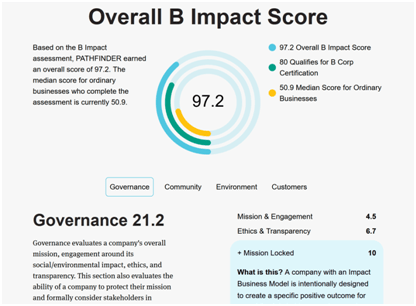
PATHFINDER is BCorp Recertified with a Global Leader Score!

We’re thrilled to announce that PATHFINDER was recently re-certified as a B Corporation. We first became a BCorp in August 2018, and have been proud members of the BCorp community ever since.

Certified B Corporations are leaders in the global movement for an inclusive, equitable, and regenerative economy. The certification is a designation that a business is meeting the highest standards of performance, accountability, and transparency in their operations and service delivery.

What’s very exciting about our re-certification is that we scored almost 10 points higher than we did when we first started out! And our Governance score is among the best in the world for a social enterprise of our size. We’ve worked hard to get to this point and we aim to continue to improve every year! Go us!

Read more on PATHFINDER’s BCorp status and more about the BCorp movement.

1 Month to go until Invest in Africa With Digital Assets Summit!

PATHFINDER is delighted to partner with Global Policy House for a high level investment summit in Nairobi and online from July 12th to July 18th 2022.

The summit will bring clarity and insight into the transformational role that Blockchain4Africa, Cryptocurrency, Decentralised Finance, the Metaverse can play in growing Africa and supporting the AfCFTA.

Learn more about the summit and how to register here.

InvestAfrica22 #CBDCAfricaWeek22 #KenyaRetreat22

Building a Green Business from the Bottom Up   

Image via Pexels

This article is written and contributed by a guest author, Tina Martin of Ideaspired.com.

If you’re reading this article, chances are you’ve heard about the green movement that has been growing in homes and businesses around the world. More people are becoming cognizant of adopting a sustainable lifestyle and making changes to foster the environment.

Entrepreneurs and corporations alike are now taking the environment more seriously, and more consumers are looking to give their business to green companies. If you’re an entrepreneur, now might be the time to go green!

Not really sure how to kickstart your career as an ecopreneur? These tips and resources will help!

Learn What Makes a Business Green

First of all, let’s touch on the primary qualities of a green business:

  • Sustainability must be a priority in all of your business decisions.
  • Your service or products must be environmentally friendly.
  • No matter the operation, you must implement eco-conscious principles.
  • And you should never settle; always seek to improve your business so that it’s greener!
  • Finally, before you take things any further, be sure to establish your business with the state. Many new entrepreneurs choose an LLC thanks to the accompanying tax perks and asset protection.

Research Green Business Options

Green businesses are becoming more commonplace, and there’s really no shortage of eco-conscious career paths you can take:

  • Start a housecleaning business where you use only green cleaning products and techniques.
  • Open an energy consulting firm that conducts energy audits or advises other companies on how they can make their operations more sustainable.
  • Start a greenhouse business that sells plants, flowers, vegetables, and other natural products.
  • Sell eco-friendly products through an online store.

Think Sustainability at Every Turn

Finally, sustainability should be considered in every detail of your organization.

  • Recycle all of your paper materials in the workplace, and partner with a licensed recycler to dispose of e-waste.
  • For the times when you’re doing business away from your computer, keep a sustainable charger at the ready to power your smartphone or other device, and don’t forget to unplug the charger when not in use, as it consumes power even when not in use.
  • Use post-consumer waste (PCW) paper as much as possible.
  • If you’ll be building a structure for your business, whether now or down the road, work with a green construction company.

If you want to make a difference in your community and the world as a whole, consider becoming an ecopreneur. There are more green business options to choose from than ever before. Just keep researching and choose a career path that you can thrive in!

This article is brought to you by PATHFINDER, which strategically collaborates with partners to deliver on the Sustainable Development Goals. Partners may be academic institutions, social entrepreneurs and multinational organizations, policymakers, and other experts in global development. These partnerships have contributed to the global narrative of social entrepreneurship for the common good, through the work and the development of policy papers. For more information, contact us today!

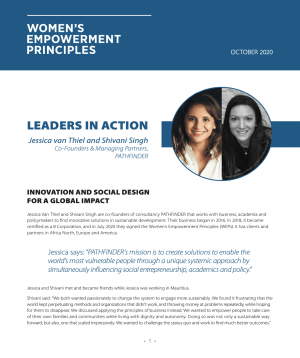
Innovation and Social Design for a Global Impact

On this International Women’s Day we are excited to share our Leaders in Action piece published by The Women’s Empowerment Principles (WEPs), established by UN Global Compact and UN Women.

The article follows our journey as co-founders of PATHFINDER. It explores our different backgrounds, skills, and strength as a team working together across continents.

The WEPs are a set of Principles offering guidance to business on how to promote gender equality and women’s empowerment in the workplace.

The WEPs are informed by international labour and human rights standards and grounded in the recognition that businesses have a stake in, and a responsibility for, gender equality and women’s empowerment. A set of standards we not only support; we advocate through our social enterprise.

PATHFINDER became signatories of the WEPs in 2020.

How to adapt to uncertainty: an interview with the University of Sussex

PATHFINDER’s Jess was interviewed by the University of Sussex Careers & Employability Centre about her PhD research, how PATHFINDER started out, and how to adapt to changing contexts and challenges. Read on here. Go Jess!

Unlocking the potential of social entrepreneurs

As members of Catalyst 2030, we had the opportunity, along with other social impact stakeholders, to contribute to the report “New Allies: How governments can unlock the potential of social entrepreneurs for the common good” led by industry leaders McKinsey, Catalyst 2030, Skoll Foundation, Ashoka, Schwab Foundation, and others.

The report, published in January 2021, has made good headway since it was presented at last year’s World Economic Forum. It highlights how governments can act in five areas to create supportive ecosystems that unlock the potential of systems social entrepreneurs. Read on here

New Allies report cover


The Last ‘Last Chance’ We Just Had

COP26 just wrapped up. The event had tremendous attention because by now we are well aware that without sweeping, urgent action, climate change will cause catastrophic disruption to our lives, and our world. Every such summit has failed before this one, to accomplish what needed to be done, which further added pressure. So, did we deliver this time? The simple answer is, no. 

Sure; throughout COP26, several initiatives addressing climate resilience were announced, to drive progress towards our shared goal of keeping 1.5ºC within reach. Unfortunately, details and requisite funding were missing. In fact, COP26 saw a great deal of climate pledges, with countries promising to end and reverse deforestation, phase out coal, and reduce methane emissions. Across the board however, policy, planning and funding fell short of these goals.

“Everyone was committed to saving the planet, but there were highly diverging views about how to do it. A welter of announcements on everything from coal to methane to forests dominated the opening days. Large numbers were discussed and ambitious targets were set”. Ian Scoones, Professorial Fellow, Institute of Development Studies

Certainly there were some worthy efforts. Last week, for instance, Edinburgh City joined over 30 cities in the Climate Champion’s Race to Resilience campaign. The UN-backed initiative also launched a metrics framework that allows cities, regions, businesses and investors to measure the progress of their work in building resilience to climate change. Over 2.3 billion people and 100 natural systems and over 100 countries are so far covered by the work being carried out by the Race to Resilience’s partner initiatives.

Private enterprises too, got further engaged. We too believe it is imperative that businesses lead by example. In fact, as a partner of the We Mean Business Coalition, PATHFINDER is one of the 800 businesses to sign the Open Letter to G20 leaders, with asks on 1.5ºC alignment, energy and finance. Building climate resilience is actually critical for small businesses to remain viable, but they often lack the time, funding, staffing and immediate incentives to take action. Large corporations are increasing decarbonization demands for SMEs in order to meet their own net-zero targets by tackling emissions in their supply chains. Corporates and governments must work together to support SMEs and incentivize the transition, ensuring no one is left behind. But even the private sector needs clear, ambitious policies to drive this objective further and faster. 

“The announcements from governments so far on climate action are heading in the right direction. There’s a ratcheting up of ambition but it’s not going far enough.” – Rasmus ValankoLeading systems transformation at We Mean Business.

Citizens, and youth in particular, were seen protesting in cities around the globe, demanding our leaders put aside special interests and do what is necessary to save the world. It is after all, ordinary citizens and youth especially, who must suffer the worst consequences of a heated planet. 

Canadian environmental youth activist, Ta’Kiya Blaney Chegajimixw, spoke of her frustration with this year’s summit, “I’ve been inside these spaces since I was eight. Back then, I ripped up the COP declaration, and I will rip up today’s. Nothing has changed inside this space; it is a performance; it’s an illusion; it’s for convincing the public that something is happening. The climate agreements are actually trade agreements. It’s a way of salvaging global economies based upon colonialism and the extraction of our territories without interrupting them.” – Ta’Kiya Blaney Chegajimixw, Tla’amin Nation Canada, Environmental Activist

It is indeed past time for all nations to demonstrate climate ambition that reduces the degradation of our environment, and (dare we say) reverses it. That we will see enduring damages is certain. How much damage exactly, is something we can still control. We have yet to plan exactly how we will respond to this damage. We do know however, that the solution is to work collectively. That includes our citizens, our enterprises, and our leaders. 

References:

COP26: Two worlds talked past each other — or never even met (theconversation.com)

COP26 delegates, activists, and event workers explain how they feel about the last two weeks of negotiations (businessinsider.fr)

We Mean Business Coalition

Catalysing Collaboration: Catalyst2030’s Report Out Now

PATHFINDER collaborated with Catalyst 2030 & Resonance, by working on solutions for development driven by people for themselves. We contributed to new research on how and why companies collaborate with social enterprises to advance CSR goals, and the SDGs.

The report, Catalysing Collaboration: How & Why Corporates & Social Enterprises Should Partner to Achieve the Sustainable Development Goalsincludes real-world partnership examples, collaboration models, and recommendations to scale impact. FIND IT HERE.

Catalysting Collaboration report cover

Check It: We’re Rebranded, Refreshed and Revitalized at PATHFINDER!

Hello friends, colleagues and supporters!

It’s been a while and we’ve missed you. As we begin (hope) to see light at the end of this COVID-19 tunnel, we want to check in.

If you haven’t caught it already, here’s our latest newsletter with all the details of what we’ve been up to over the past year, including PATHFINDER’s brand-new look!

Hope you’re all well and we look forward to hearing from you soon.

Virtual learning opens doors to global industry experience

Given the current global challenges brought on by the COVID 19 pandemic, virtual learning has become the new norm (at least for the time being) in Universities globally.

Although PATHFINDER has always been involved in developing virtual learning programmes, we’ve seen an increase in the demand of theses types of programmes internationally. Including a recent work integrated learning programme we designed with RMIT Australia.

Collaborations such as this are now more important than ever. They’ve been key for students to gain practical business experience as well as a greater understanding of the role of social entrepreneurship in the international development sector.

Students from around the world had overwhelmingly positive feedback on their experience working with PATHFINDER, “I would recommend this kind of experience to other students. It’s a great opportunity to get out of your comfort zone and challenge yourself” said Qihui Wang, studying from China.

Andrew Crane, studying from Australia expressed his interest in, “working for an organisation that works concurrently with industry and academia. This project gave me a good insight into how small, independent organisations like Pathfinder can accomplish this task, especially within constantly evolving political and economic environments.”

Read more about their experience and details of the programme here.

We’d like to offer our help

We want to offer PATHFINDER’s support. Being small business owners ourselves, we are acutely aware of how difficult the current circumstances are. And indeed, we are in this together. So, we’ve decided to help by offering what we do best. 
 
What’s that?
We are offering free strategy, management and project consulting, and business advice, for up to three hours per organization, for the next few months. 
 
How does that work?
If you’d like to speak with a consultant about any strategy or management concerns you have, the co-founders of PATHFINDER will work through them with you, and offer high level recommendations. If you have business-related concerns or ideas that you’d like to run by a professional, we’ll be happy to discuss them, analyzing and concluding together, the best way forward. 
 
Who might this be useful for?
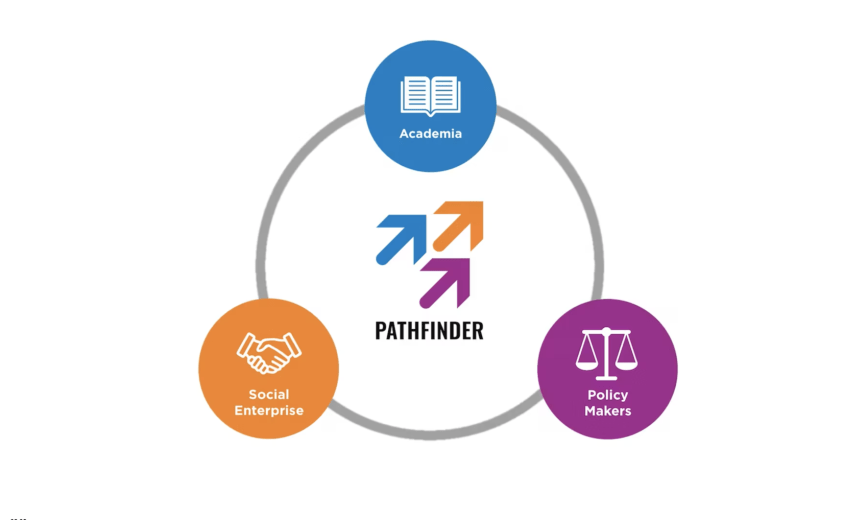
If you are a social entrepreneur, an academic, or a policy maker in the global development field, and you need to run your professional concerns by us, we’re here to help!
 
Who are we?
PATHFINDER is a Certified B Corp, that consults with Business, Academia and Policy for innovative solutions in Sustainable Development.
 
How do I take you up on this offer?

Simple: send us a note here and we’ll get in touch with you.

Let’s Get to Work!

Check out this full page ad in the New York Times about the B Corporations (BCorp) CEO Women’s Group “WeTheChange”.

New York Times We The Change

WeTheChange is a BCorp CEO Women-led group with the mission to address basic human needs through political advocacy, with a focus on economic justice through an inter-sectional lens around race, gender identity, sexuality and class. PATHFINDER is particularly involved in the economic mobility and the social impact measurement subgroups at the moment.

As members of this group, we are hopeful and excited that the movement is escalating! Here’s looking to great possibilities.

We’re Proud to Announce our Paper on Sustainable Development

When we came together to create PATHFINDER, one of our motivations was to build a system that perpetuates solutions that really, truly work. We were done accepting status quo because the status quo is very clearly not enough. Sure, we’re tiny voices speaking to a worldwide industry that is quite set in its ways. But tiny as we may be, we’re here to make a difference. 

This paper was our first endeavor and we’re so proud to publish it. What makes things even more exciting is that Canada’s Impact Investor extraordinaire himself, Joel Solomon, signed on to write a Foreword, having just published The Clean Money Revolution.

We believe our paper is the first of its kind. And so, we hope to inspire meaningful thought, conversation and with a little luck, even change. 

We contend that social entrepreneurship is a far better – and infinitely more promising – response to the calls for global sustainable development, than not-for-profit organizations. Here is why, in summary and in detail. 

We invite you to read and share this publication, and to let us know what you think. We’d love to hear from you!

With Regards,

Jess and Shivani

Announcement: PATHFINDER’s first White Paper

PATHFINDER’s first White Paper: “How to do Sustainable Development Right: The Case for the Social Enterprise”

Have you ever found yourself in a passionate discussion about what works in our global systems, and what doesn’t? Do you ever get frustrated with the state of the world, and wonder why we can’t do better? Do you ever wonder why not-for profit agencies seem slow to evolve with the times? These were some of the questions that would eventually lead to our first white paper. These are also the questions that would lead to PATHFINDER.

We’ve spoken often about how we began PATHFINDER to challenge the models of international development that don’t work, and replace them with those that do. First though, we needed to study. A lot. This paper is a byproduct of that study.

In this paper, we contend that social entrepreneurship is a far better — and infinitely more promising — response to the calls for global sustainable development. We lay out where not-for-profit organizations fall short, and how for-profit social enterprises deliver. And we make a bold call to action for the industry to change.

With this paper, we would love to start a meaningful discussion. We would love for this to inspire collaboration. And we look forward to any opportunities the publishing of our paper creates.

Releasing on May 7th, and introduced by Canada’s most influential impact investor and visionary, Joel Solomon, look out for “How to do Sustainable Development Right: The Case for the Social Enterprise.”

PATHFINDER Logo

PATHFINDER and CIYOTA

PATHFINDER is pleased to announce a new partnership with CIYOTA.

CIYOTA photo.png


“COBURWAS International Youth Organization to Transform Africa’s (CIYOTA) mission is to improve the lives of young people through functional education, socially responsible leadership and social entrepreneurship activities. CIYOTA has established various programs within Kyangwali refugee settlement camp in Uganda to address critical challenges faced by the refugee community such as poverty, violence, disease and insufficient access to quality and functional education.”

CIYOTA focus on three main activities: delivering primary and secondary education to youth, university guidance and women’s empowerment, and community work and involvement.

Most recently, CIYOTA has expanded to the Democratic Republic of Congo (DRC), to help educate children and youth, build communities, and enable entrepreneurs with relevant skills. DRC “is the big country with big problems but also big potential. For 134 years Congo has gone through slavery, assassination, dictatorship and decades of wars. This resulted into 6 million people killed in cold blood and hundreds of women raped. Congo never got a chance to build strong institutions.”

CIYOTA is the incredibly successful passion project of our friend, Bahati Kanyamaza, a former child soldier and refugee himself. We met Bahati a few years ago, and he told us about the story of refugees who grew up in the camps of central Africa, only to one day rescue others from a similar fate.

Bahati and his partners swore to change the world around them. And for so many children and youth, they have!


Why I paid it forward

PATHFINDER’s Shivani Singh recently spoke about her experience at Social Venture Institute at Hollyhock, and the importance of paying it forward.

Here’s what Hollyhock shared:

We’ve spoken often about how generous and collaborative the social enterprise community is. And indeed, we are a community. We help each other. – Shivani Singh, PATHFINDER

An incredible thing about Hollyhock is the community of people that are brought together by this place. It’s this community which has been the driving force in bringing even more social change leaders to our shore through financial support.

Shivani Singh is one of those people. A social entrepreneur and co-founder of PATHFINDER, she received financial assistance to attend our Social Venture Institute last year. Since then, she has been an active advocate, working to raise money for our Dana Bass Solomon Scholarship Fund in support of other extraordinary change makers, like herself.Shivani BW.jpg

“When PATHFINDER was just beginning, the pro-bono services and resources of others who had been there before us, helped us get off the ground. We learned so much, we built fast, and we grew tremendously.  And we did it all on minimum expense because of the generosity of perfect strangers, people who were connected to us only by a shared passion to help build a better world.

The opportunity to attend SVI at Hollyhock came about when we had no money.

Our earliest champion and new friend, Joel Solomon, really wanted us to attend, so he paid our way. While at SVI, we tried to pay him back, but of course, Joel was not interested in the money. He wanted us to meet him and other incredible people in that powerful setting. In this discussion, where we refused to just take this sizeable gift and Joel refused to have it back, we came up with an idea: Why not pass it on – the entire gift – so that others may have access to the amazing opportunities we did? Those before us were kind and generous, and we were enabled by their spirit. Why not participate in this most wonderful and powerful cycle of generosity, so that future social entrepreneurs may have a better shot at success too?

And so, here we are. Our first order of business, as soon as we had made some money, was to contribute our entire SVI Hollyhock gift amount to the Dana Bass Solomon Scholarship Fund. We made ourselves proud, sure; but more than that, we hope to have started something amazing.

We hope to have started a chain of good people doing more good for others like them. We hope to have inspired the SVI community to join us. We hope many more social entrepreneurs can now attend the fantastic Social Venture Institute.”


To scale or not to scale? A quick guide in scaling your social enterprise

By Jessica van Thiel

cook ethos team photo.JPG
http://www.cookethos.com

“Nearly every problem has been solved by someone, somewhere. The challenge of the 21st century is to find out what works and scale it up.” -Former US President, Bill Clinton

In the past few decades, social entrepreneurship has gotten a lot of attention. From academia to business, people are recognizing the importance of social entrepreneurs and the invaluable work they do. Social enterprises are like any other business; they must have a strategy for growth and to scale once they are out of the startup stage.

Many business owners fall into the trap of wanting to scale before they are ready. They want their business to grow so they scale up their processes to inspire that growth. Unfortunately, this can actually result in stalling the development of a business. Scale too quickly or recklessly, and you’ll create a lot of organizational problems that will be hard to undo. Scaling before you’re ready may even cause your business to fail. Scale too slowly, however, and you may miss out on key opportunities that come with greater resources and revenue[1]. So how do you go about doing any of this? First, it’s crucial to know what you’re scaling to begin with.

Measuring impact?

While every business has to consider its customers, social enterprises have a particularly important task; they need to consider social impact and how to measure it. Measuring social impact is often one of the most difficult things to do as it’s not tangible. From education to gender equality and environmental impact, these issues often take years before one can see results and even then, how can an entrepreneur really know if they are using the right indicator or measurement? You’re not selling t-shirts after all, so how do you know you’ve done well?

The key might lie in the research. You need to really understand what your service is, and what your goals are. Once you’ve identified it all, and it may take months or even years to define, you can then start to look at what works and what doesn’t. By eliminating what doesn’t work you can adjust and refine the way you approach solving the issue.

Additionally, assigning appropriate measurements is critical. Although social in nature, you should find a way to measure your impact in numbers. If the goal is to provide access to education for children in India for example, then the first unit of measurement can be the number of children your social enterprise has put through the school system. The number enrolled, attended and completed. Why is it so important to be able to measure impact, almost from the start? Because, if you don’t know how you’re doing, you won’t know when it’s time for the next stage – i.e. time to scale.

Scaling can be a daunting task for any small business, let alone a social enterprise. With the objective of understanding the process further, PATHFINDER spoke with cook ethos, a startup social enterprise with the mission of connecting people through food, to learn about what strategies, if any, they had in scaling their enterprise. Cook ethos is “a fun and fresh approach to learn how to cook new dishes and gives you the chance to learn about cuisines and meet people from all corners of the globe – in the region of London” (think Airbnb meets cooking lesson). The startup was launched this year by three young female entrepreneurs.

While they are very much in the startup phase, they’re already considering how to scale their company. And for them, it needs to happen quickly if they want to make an impact in their community, be successful and eventually turn a profit. Although they have many ideas and potential business avenues they could explore, at the core, their service is to connect hosts and guests for a unique cooking experience. So the way they’ll measure impact is simple: it’s in the numbers. Guests provide testimonial for their experience, and with an overwhelming percentage of testimonials being positive, it is safe to say in their case, that the more people who book their service, the more impact they’ll have on the community. This, they explained, was a relatively easy question to answer. The next question, how to scale is more complicated.

Do they scale regionally or internationally? Do they expand their product to offer different services or do they focus on the bookings?

Charlotte Morrison, COO and Co-Founder of cook ethos explained,

In order to get things right, we’re now trying to focus on just one area to scale but in doing so, we don’t want to neglect the hosts in other areas because they are still very valuable to us. We don’t want to lose sight of them. So the question is how do we find a balance. That would probably be our biggest challenge regarding scaling at the moment.

These are the kinds of questions that every entrepreneur faces. How to keep the integrity and goals of the business intact while scaling? In the beginning you might not have the luxury of being selective. When you’re desperate for cash, it’s easy to cut corners, compromise your values and deliver a subpar product or service. But the businesses that manage to weather their growing pains and stick to their guns are the ones that last longest and shine brightest[2].

So what’s the solution if you want to scale successfully? In short, maintain your focus. As entrepreneurs, we tend to want to seize every opportunity that comes our way. And although it’s good to pursue some, it’s alright to keep your focus narrow in the beginning and expand once you’ve gotten it (whatever it may be) right.

Once you’ve achieved product-market fit and started scaling up based on that main offering, don’t go crazy trying to add features or related products. Make sure you can do one thing better than anyone before you start building new stuff” Chelsea Segal of Cox BLUE points out.

Cook ethos is doing just that, keeping focused. And it’s working.

To scale or not to scale

Knowing when to scale is important. Knowing how to scale is essential. Because making money doesn’t always equate success, especially if you are a mission driven enterprise. Charlotte Morrison explains,

When it comes to scaling, one thing we anticipate that will be difficult, is keeping our integrity and respecting our mission. If we expand internationally, for example, different countries will almost certainly have their own way of doing and managing things. We operate like a family business and we don’t ever want to lose that, no matter how big we get”.

This is a tricky one. On the one hand as a startup, it’s difficult to turn down work, especially when clients aren’t exactly knocking on your door. On the other hand, without consistency of the product or service, an enterprise can quickly lose its brand integrity.

The trick is in the balance. When a company scales too quickly and doesn’t have the structure to support the growth, failure rates will increase[3]. You need to expand to operate and this should be a natural, cyclical process. Chelsea Segal of Cox BLUE highlights the biggest mistakes a business can make when scaling is over hiring, over spending, and over building. She explains, “You need to stay lean during the scaling process. Don’t hire too many people (especially middle managers or specialists). These take away from your core competencies and leave you prone to trying to scale other areas too quickly” and “there’s a tendency for startups to get loose with their money once they’ve raised a lot during the fundraising stage. Keep all of your spending focused on growing the business”.

Balancing act

Balance is crucial here. Check back in with your values and mission regularly. Think quality not quantity. Eventually, if you do a good job, more work will come your way. And when it does, get it done. You don’t want to compromise the quality of the work; however, you don’t want to say no to new clients (especially if they’re the kind of clients you’ve been seeking). So even if you don’t have the infrastructure in place to complete the work or project, you make it happen anyway. It’s a tricky thing to get right, but in the beginning like all successful startups, you’ve got to work your butt off.

Cook ethos has considered this very scenario,

We’ve considered a situation where we might have more work than we can handle. Ultimately we would never say no to clients and we would just work it out. Although we don’t foresee this happening in the next year, if it were to happen before we had the infrastructure in place, we would adapt. We’d probably get all of friends and family on board. We’d do whatever it takes to make it happen!”

This is a good problem to have for any business. And the difference between a successful business and a non-successful one is all in the approach and attitude. In short: adapt to the research, know your product or service better than anyone, and check back in to find your balance.

[1] https://www.coxblue.com/5-important-tips-for-scaling-your-startup/

[2] https://www.entrepreneur.com/article/299214

[3] – Jeanna McGinnisReResumeMe®


Love What You Do: PATHFINDER’s Leadership Journey

By Jessica van Thiel

This article was first published in Leader Stories

dsc00773_fotor-2

My colleague Shivani and I founded PATHFINDER, in 2015, as an international social enterprise based in Canada and France. PATHFINDER consults with business, academia and policy for innovative solutions in the world of sustainable development. Our mission is to perpetuate solutions that protect and enable the world’s most vulnerable.

Everything about our organization is unique, from our business model to our daily operations. Living on different continents with different time zones has been an opportunity for us, instead of a challenge, and one that has driven much of our success. We love what we do.

Here’s a little more about our (and my) story.

Q: Why did you decide to go into the nonprofit/social purpose sector?

A: Well, first, it’s good old-fashioned passion. We’ve both dreamed of doing this work our whole lives.  We started PATHFINDER after casually discussing, over dinner, the major gaps and opportunities in the NGO/nonprofit sector. We wanted to create a social enterprise that addressed these industry challenges, instead of perpetuating them, and we wanted to implement a business model that strives to do good while doing well.

Q: What keeps you here?

A: The opportunity, flexibility and excitement this industry brings. It has been such an exciting journey so far, and we’re just getting started! We imagine a future with even more opportunity to do what we love. In the meantime, we’re just happy to be working in such a fast-paced and evolving field.

Above all, to us, this is a calling. There is no other plan but this one. It’s a feeling we each share, deep in our bones. It’s a certainty we know.

Q: What is your favorite thing about your work day?

A: The variety. Every day is different. A day can include meetings with partners, clients, media and researchers. It can include everything from writing research reports and articles for mainstream media outlets, to attending and presenting at conferences, and facilitating workshops. Our days are often unpredictable too.

Another very cool thing is that we are constantly inspired. We regularly connect with some really amazing people doing some really great things. We learn all the time. We collaborate with like-minded individuals. We create solutions to real problems. How many people get to feel these things in each work day? It’s a phenomenal experience.

Q: What impact or success are you most proud of?

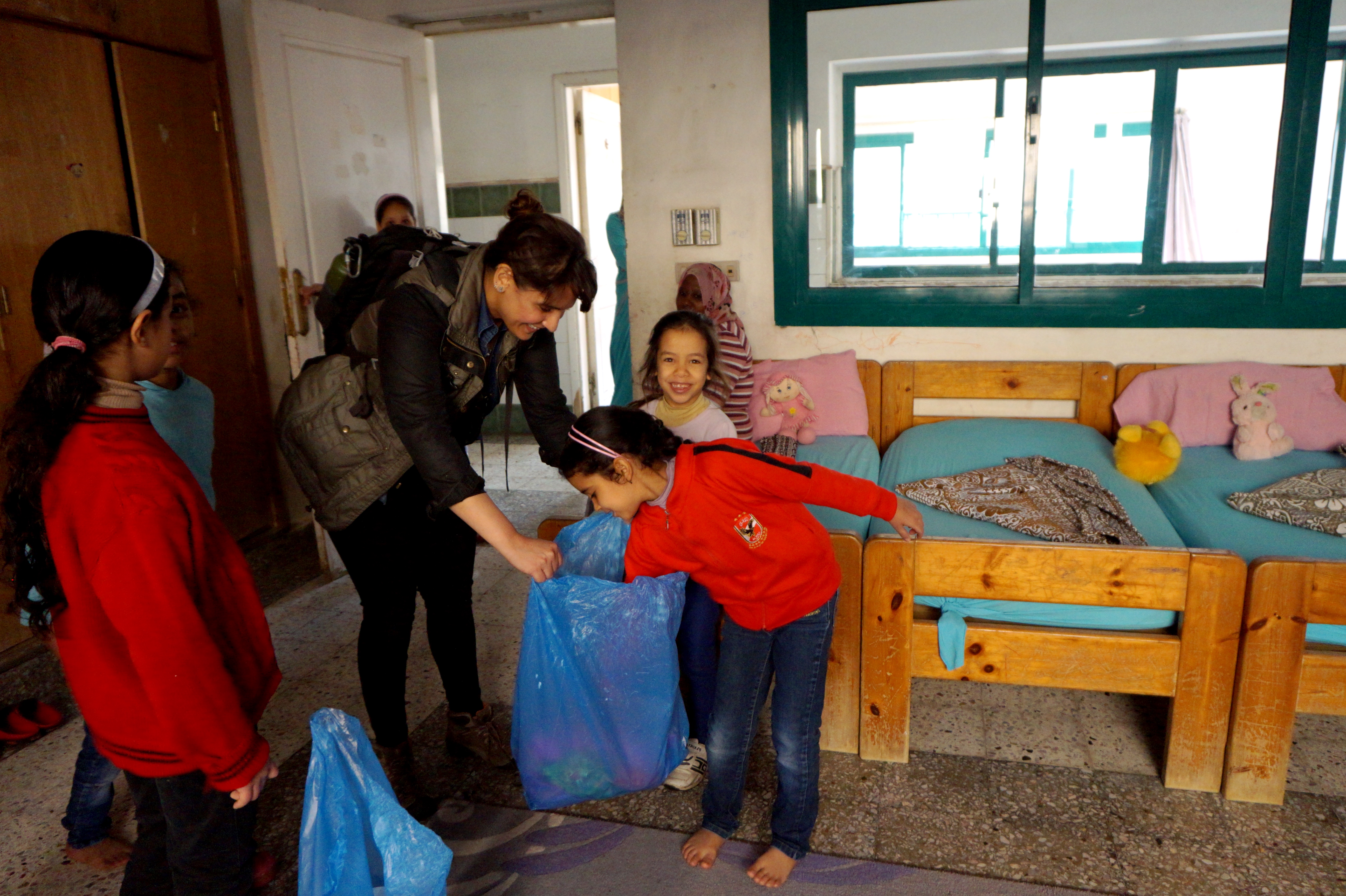
A: In December 2016, we organized a humanitarian mission (our first) to some refugee camps along Syria’s border with Lebanon. Through generous donations, we were able to provide much-needed resources to over 500 children and their families.

Q: We all have our “failing forward” moments. Can you share a failure that in retrospect led to growth or learning?

A: Being a social entrepreneur and starting a business has been a huge learning process, both professionally and personally. We’ve had to re-evaluate our business model often, which is a difficult thing to do.

Also, one of the first big lessons we learned from failing at pitches was that not everyone will believe in our work or even in us. There is a lot of feedback out there, both positive and negative. We conscientiously decided to solicit and accept all feedback, to then review, choose and learn what we could while moving past any ignorance or negativity. We learned from everything while we learned not to be beaten down by anything. It took a lot of practice and now this process comes naturally to us.

Q: In a few words, what most gets in the way of your ability to be the leader you want to be?

A: Ourselves. There are no real obstacles, only excuses. For us, it has been juggling responsibilities like jobs, studies, families, etc., that perhaps if we didn’t have, we could focus all of our time on PATHFINDER. However life doesn’t work that way, nor should it. It’s healthy to have a balanced life, and the trick is being able to use the time you have in the smartest way possible.

We’re making progress and we’re getting closer to where we want to be. At the end of the day, the only limitations are our own.

Q: Tell me about a learning experience that supported your leadership development.

A: I participated in the American Express Leadership Academy in New York City in October 2017.

Among other things, it reinforced for me that a good leader is compassionate, empathetic and seeks opportunities to learn. A good leader always works to grow. These possibilities were made available to us at the Academy. We met people who introduced us to lives we were fortunate enough to never know, and we listened. We met experts and we learned. We grew a little, professionally and personally. These are all lessons that make us better people, and stronger leaders.

I also left with a fantastic network that I have committed to remain active in.

Q: What has been your biggest area of growth as a leader in the past year or two?

A: We’ve become stronger people. The more we’ve learned, the less we’ve accepted we know. We’ve also learned to never lose sight of what our goals are as entrepreneurs, while staying true to our values.

Q: Why is it important that today’s nonprofit and social purpose leaders get professional development supports?

A: Because, at the end of the day, you are an entrepreneur running a business. You need to have the skills and tools to be able to do that successfully. It’s great to have the passion and theory, but without the practical skills and professional development, you can only go so far.

Q: What is something that people don’t know about you from reading your resume? 

A: We are passionate about travel and learning about new cultures and people. We each come from international backgrounds and have travelled and lived all over the world. We actually met on the idyllic island of Mauritius where Jess was working with the United Nations Development Programme and reporting to Shivani’s friend, mentor, and then UN Resident Coordinator for Mauritius and Seychelles.

We’re also big fans of good wine. Cheese isn’t bad either.

Q: Please share your greatest piece of leadership advice for your social sector peers across the world.

A: Believe in yourself. Believe in your purpose and others will want to follow. If you are unsure, it will be difficult to convince others. Passion is contagious and every good leader should have the ability to express it. Also, never stop learning. Ever.

Q: Three words: If you had to name three specific abilities, skills or mindsets that you think every 21st century nonprofit leader needs, what would they be?

A: Passion, Tenacity, Flexibility.

This is not the sort of thing you do without a deep belief in its value. You need to commit to success, no matter what it takes. And we can assure you, it takes a lot.