How You Can Support Your Local Refugee Community in Canada

Photo via Pexels

Guest post by: Tina Martin

Today, on World Refugee Day, it’s important to note that number of refugees is increasing worldwide. From 2021 to 2022, the number of displaced people jumped from 27.1 to 35.3 million, according to the United Nations High Commissioner for Refugees. Like many countries, Canada sees its share of asylum applications. If you’re in Canada, you may be wondering what you can do. You don’t need a big bank account to help. There are many ways you can offer assistance without donating money.

Offer Housing

If you have a spare room in your home, you might host a refugee in need of a place to stay. Organizations like Refugees At Home connect those with extra space with refugees. There are similar initiatives and foundations throughout Canada.

Donate Food

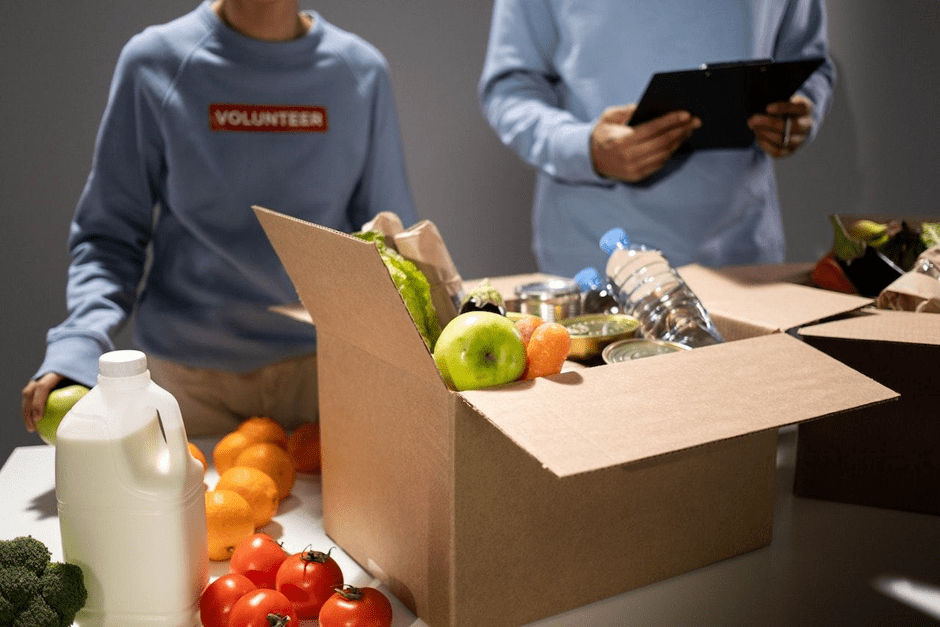
If you don’t have extra space in your home, there are still other things you can donate – like food! Some charities accept ready-cooked meals or invite volunteers to prepare meals to give away. Others simply request donations of food that refugees can use to cook for themselves. There are certain types of foods that food banks need the most, including canned beans, pasta and sauce, canned vegetables, and baby formula.

Donate Clothing or Household Goods

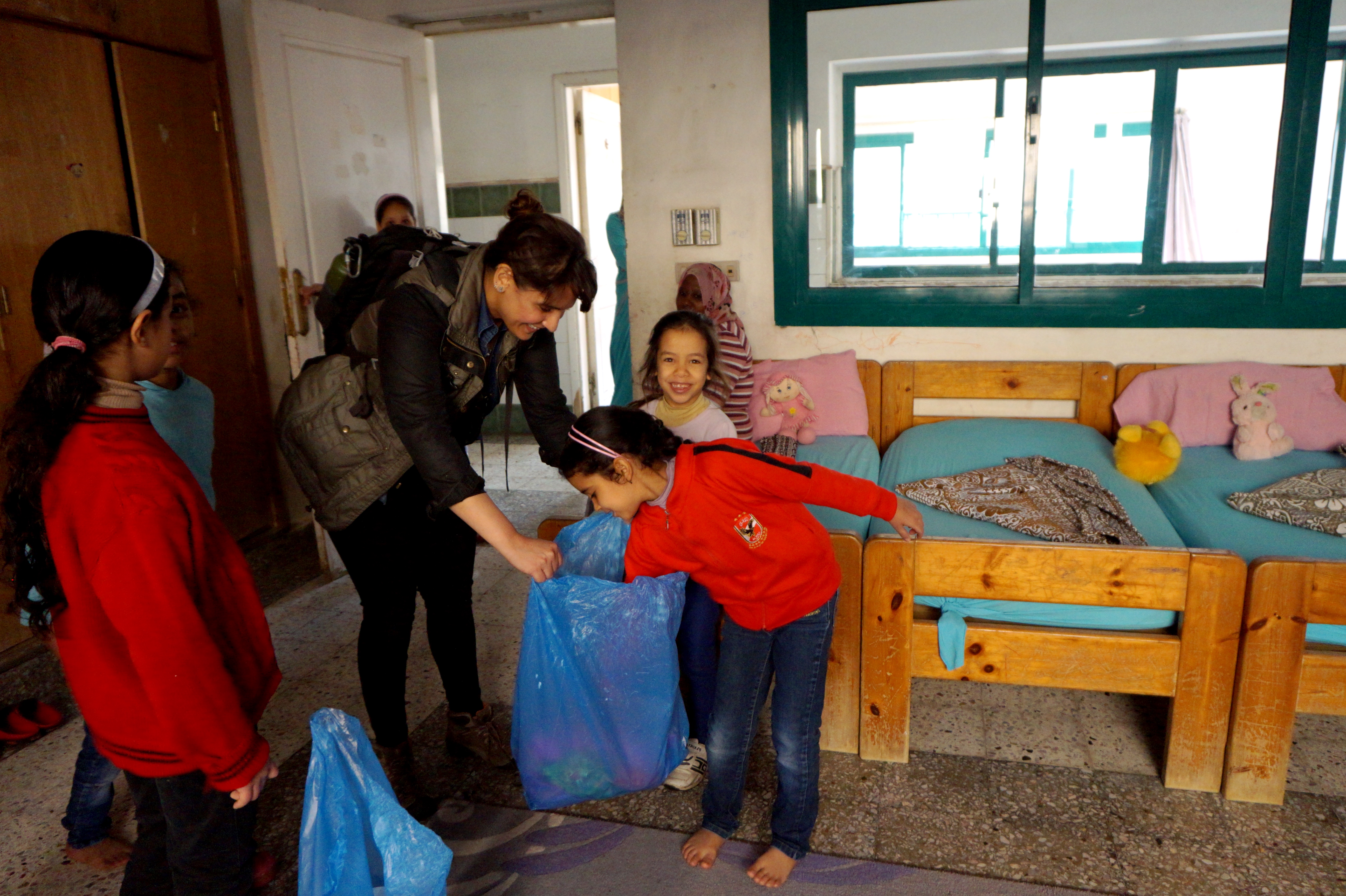
Many refugees arrive in Canada with few possessions. You can help them get a fresh start by donating extra clothing or household goods. When donating clothing, make sure it’s in decent condition. The clothing should be free of any damage, clean, and without stains or spots. The same is true for household goods. When it comes to furniture, note that some items, like mattresses, should never be donated.

Donate Air Miles

If you’ve got air miles racked up that you aren’t using, consider giving them to a good cause. Refugee organizations may use air miles for flights, for example for family reunification purposes. Rules vary between organizations, so contact your airline first to make sure it’s possible to donate miles. Note that you may be able to write off this charitable contribution for tax purposes.

Keep a Record of Your Giving

If you give any items of monetary value to charity, keep a record. You can write off these contributions on your tax forms. For example, if you’re donating clothing or furniture, write down what you’re giving, note its value, and take a photograph. To keep track of your donations, digitize them into PDFs which you can access on your smartphone. This way, you can easily organize and compile all of your documents.

Be a Cultural Partner/Volunteer

If you don’t have any tangible items to give, it’s still possible to donate your time. For example, you can partner with area charities to help newcomers to Canada – especially children – acclimate to the culture and master the language. Simply meeting with someone to practice speaking English can be a wonderful way to help.

There are many refugees in Canada already, and the numbers may increase in the years to come. The entire community can benefit from the harmonious integration of these newcomers. The above guide has some tips for how you can help.

PATHFINDER is here to promote equality through practical, systemic change. We’d love to hear from you!

This post was written by guest blogger Tina Martin, published by PATHFINDER in support of refugees globally.
We’re Proud to Announce our Paper on Sustainable Development

When we came together to create PATHFINDER, one of our motivations was to build a system that perpetuates solutions that really, truly work. We were done accepting status quo because the status quo is very clearly not enough. Sure, we’re tiny voices speaking to a worldwide industry that is quite set in its ways. But tiny as we may be, we’re here to make a difference. 

This paper was our first endeavor and we’re so proud to publish it. What makes things even more exciting is that Canada’s Impact Investor extraordinaire himself, Joel Solomon, signed on to write a Foreword, having just published The Clean Money Revolution.

We believe our paper is the first of its kind. And so, we hope to inspire meaningful thought, conversation and with a little luck, even change. 

We contend that social entrepreneurship is a far better – and infinitely more promising – response to the calls for global sustainable development, than not-for-profit organizations. Here is why, in summary and in detail. 

We invite you to read and share this publication, and to let us know what you think. We’d love to hear from you!

With Regards,

Jess and Shivani

PATHFINDER and CIYOTA

PATHFINDER is pleased to announce a new partnership with CIYOTA.

CIYOTA photo.png


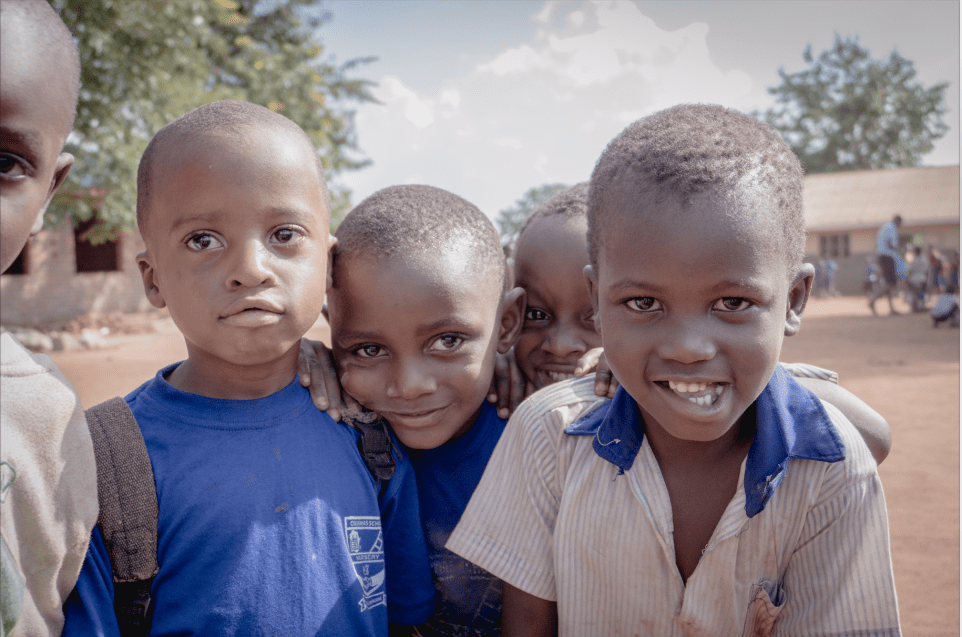
“COBURWAS International Youth Organization to Transform Africa’s (CIYOTA) mission is to improve the lives of young people through functional education, socially responsible leadership and social entrepreneurship activities. CIYOTA has established various programs within Kyangwali refugee settlement camp in Uganda to address critical challenges faced by the refugee community such as poverty, violence, disease and insufficient access to quality and functional education.”

CIYOTA focus on three main activities: delivering primary and secondary education to youth, university guidance and women’s empowerment, and community work and involvement.

Most recently, CIYOTA has expanded to the Democratic Republic of Congo (DRC), to help educate children and youth, build communities, and enable entrepreneurs with relevant skills. DRC “is the big country with big problems but also big potential. For 134 years Congo has gone through slavery, assassination, dictatorship and decades of wars. This resulted into 6 million people killed in cold blood and hundreds of women raped. Congo never got a chance to build strong institutions.”

CIYOTA is the incredibly successful passion project of our friend, Bahati Kanyamaza, a former child soldier and refugee himself. We met Bahati a few years ago, and he told us about the story of refugees who grew up in the camps of central Africa, only to one day rescue others from a similar fate.

Bahati and his partners swore to change the world around them. And for so many children and youth, they have!


Love What You Do: PATHFINDER’s Leadership Journey

By Jessica van Thiel

This article was first published in Leader Stories

dsc00773_fotor-2

My colleague Shivani and I founded PATHFINDER, in 2015, as an international social enterprise based in Canada and France. PATHFINDER consults with business, academia and policy for innovative solutions in the world of sustainable development. Our mission is to perpetuate solutions that protect and enable the world’s most vulnerable.

Everything about our organization is unique, from our business model to our daily operations. Living on different continents with different time zones has been an opportunity for us, instead of a challenge, and one that has driven much of our success. We love what we do.

Here’s a little more about our (and my) story.

Q: Why did you decide to go into the nonprofit/social purpose sector?

A: Well, first, it’s good old-fashioned passion. We’ve both dreamed of doing this work our whole lives.  We started PATHFINDER after casually discussing, over dinner, the major gaps and opportunities in the NGO/nonprofit sector. We wanted to create a social enterprise that addressed these industry challenges, instead of perpetuating them, and we wanted to implement a business model that strives to do good while doing well.

Q: What keeps you here?

A: The opportunity, flexibility and excitement this industry brings. It has been such an exciting journey so far, and we’re just getting started! We imagine a future with even more opportunity to do what we love. In the meantime, we’re just happy to be working in such a fast-paced and evolving field.

Above all, to us, this is a calling. There is no other plan but this one. It’s a feeling we each share, deep in our bones. It’s a certainty we know.

Q: What is your favorite thing about your work day?

A: The variety. Every day is different. A day can include meetings with partners, clients, media and researchers. It can include everything from writing research reports and articles for mainstream media outlets, to attending and presenting at conferences, and facilitating workshops. Our days are often unpredictable too.

Another very cool thing is that we are constantly inspired. We regularly connect with some really amazing people doing some really great things. We learn all the time. We collaborate with like-minded individuals. We create solutions to real problems. How many people get to feel these things in each work day? It’s a phenomenal experience.

Q: What impact or success are you most proud of?

A: In December 2016, we organized a humanitarian mission (our first) to some refugee camps along Syria’s border with Lebanon. Through generous donations, we were able to provide much-needed resources to over 500 children and their families.

Q: We all have our “failing forward” moments. Can you share a failure that in retrospect led to growth or learning?

A: Being a social entrepreneur and starting a business has been a huge learning process, both professionally and personally. We’ve had to re-evaluate our business model often, which is a difficult thing to do.

Also, one of the first big lessons we learned from failing at pitches was that not everyone will believe in our work or even in us. There is a lot of feedback out there, both positive and negative. We conscientiously decided to solicit and accept all feedback, to then review, choose and learn what we could while moving past any ignorance or negativity. We learned from everything while we learned not to be beaten down by anything. It took a lot of practice and now this process comes naturally to us.

Q: In a few words, what most gets in the way of your ability to be the leader you want to be?

A: Ourselves. There are no real obstacles, only excuses. For us, it has been juggling responsibilities like jobs, studies, families, etc., that perhaps if we didn’t have, we could focus all of our time on PATHFINDER. However life doesn’t work that way, nor should it. It’s healthy to have a balanced life, and the trick is being able to use the time you have in the smartest way possible.

We’re making progress and we’re getting closer to where we want to be. At the end of the day, the only limitations are our own.

Q: Tell me about a learning experience that supported your leadership development.

A: I participated in the American Express Leadership Academy in New York City in October 2017.

Among other things, it reinforced for me that a good leader is compassionate, empathetic and seeks opportunities to learn. A good leader always works to grow. These possibilities were made available to us at the Academy. We met people who introduced us to lives we were fortunate enough to never know, and we listened. We met experts and we learned. We grew a little, professionally and personally. These are all lessons that make us better people, and stronger leaders.

I also left with a fantastic network that I have committed to remain active in.

Q: What has been your biggest area of growth as a leader in the past year or two?

A: We’ve become stronger people. The more we’ve learned, the less we’ve accepted we know. We’ve also learned to never lose sight of what our goals are as entrepreneurs, while staying true to our values.

Q: Why is it important that today’s nonprofit and social purpose leaders get professional development supports?

A: Because, at the end of the day, you are an entrepreneur running a business. You need to have the skills and tools to be able to do that successfully. It’s great to have the passion and theory, but without the practical skills and professional development, you can only go so far.

Q: What is something that people don’t know about you from reading your resume? 

A: We are passionate about travel and learning about new cultures and people. We each come from international backgrounds and have travelled and lived all over the world. We actually met on the idyllic island of Mauritius where Jess was working with the United Nations Development Programme and reporting to Shivani’s friend, mentor, and then UN Resident Coordinator for Mauritius and Seychelles.

We’re also big fans of good wine. Cheese isn’t bad either.

Q: Please share your greatest piece of leadership advice for your social sector peers across the world.

A: Believe in yourself. Believe in your purpose and others will want to follow. If you are unsure, it will be difficult to convince others. Passion is contagious and every good leader should have the ability to express it. Also, never stop learning. Ever.

Q: Three words: If you had to name three specific abilities, skills or mindsets that you think every 21st century nonprofit leader needs, what would they be?

A: Passion, Tenacity, Flexibility.

This is not the sort of thing you do without a deep belief in its value. You need to commit to success, no matter what it takes. And we can assure you, it takes a lot.


The Gender Landscape After #MeToo

By Jessica van Thiel

The #MeToo Campaign is one of the most powerful social media campaigns of all time. On October 15 2017, actress Alyssa Milano encouraged the use of #MeToo (originating from social activist, Tarana Burke, 2006), to create awareness and a sense of the magnitude of sexual abuse and harassment. While there is no one leader of this movement (rather thousands of women who are speaking out against this prolific problem) several Hollywood names helped to propel the campaign into global action.

Actress Ashley Judd was the first of many who spoke out in October of 2017, about unwanted sexual advances by Harvey Weinstein, one of Hollywood’s most prolific and successful movie producers. Since her admission, over 80 actresses have come forth against Weinstein, including stars like Angelina Jolie and Gwyneth Paltrow. And, as allegations against him continue to pour in, on May 25th 2018, Weinstein was charged by the city of New York, with rape and sexual abuse in two cases. It seems like only eight months after women began to come forward with their stories, the Weinstein name is now more synonymous with sexual assault than it is with movie-making.

For decades apparently, this sort of behavior was common practice in the entertainment industry. Weinstein’s abuses have been referenced as Hollywood’s greatest open secret. Why was this accepted? How could he have gone so far, with so many women, and gotten away with it for so many years? It seems incredible when you think about it. But the truth is it’s not uncommon. In fact the #MeToo campaign has proven just how ubiquitous the problem is.

However, a silver lining has emerged to this awful story. The celebrities who have spoken out have paved the way for regular, everyday women to do the same. The campaign had incredible success on social media and #MeToo (also adapted into #BalanceTonPorc, #YoTambien, #Ana_kaman and others), has provided support and solidarity for millions of people to come forward with their stories. The movement itself has been so successful, that as at November 2017, 82% of American polled said women are more likely to speak out about harassment since the Weinstein allegations, and that 85% say they believe the women making allegations of sexual harassment (Time Magazine, 2017).

The “Silence Breakers” – victims who spoke out about their stories of sexual harassment – made such an impact on society that they were voted “2017 Person of The Year” by Time Magazine. With widespread success of the campaign and Weinstein’s recent arrest, it appears that steps are being taken in the right direction. But what are these steps and how will they ensure the sexual abuse, harassment and silencing of women is no longer accepted?

#MeToo has received attention in all corners of the world. With access to internet and media in certain countries already being an issue, it’s no surprise that the campaign has had more success in some countries than others. In India for example, where in recent years outrage over sex crimes has sparked waves of public protests, it makes sense that #MeToo resonates with the public. However, not everyone has access to internet, and although the campaign reached only a small number of people with respect to India’s population, as Sian Brooke of the Oxford Internet Institute points out, “it has brought the idea of sexual harassment and assault into the public consciousness. And even if the discussion around the movement is criticism, you are still bringing about an awareness that this happens” (BBC, 2018).

In Canada, women are sharing their experiences of sexual violence like never before, resulting in a huge increase in demand on Canada’s sexual violence support services. For example, calls to the Ottawa Rape Crisis Centre increased 100% in the last year alone (Canadian Women’s Foundation, 2018). One initiative, the #AfterMeToo (partnered with the Canadian Women’s Foundation) has created a fund that addresses the increased demand on sexual violence support services across Canada.

In the US, from October to December 2017, calls to the Rape, Abuse & Incest National Network crisis hotline rose by 23% compared with the same period in 2016 (BBC, 2018). The National Women’s Law Center (NWLC) in Washington DC has, as a result of the campaign, been matching victims with lawyers who can offer them free advice (NWLC, 2018).

Another initiative which has been very successful in addressing the #MeToo question is the Time’s Up Legal Defense Fund. The Fund was launched by more than 300 actresses, writers and directors in January 2018 and raised $21million in legal assistance for people who suffer harassment, abuse or assault at work in its first operating month alone (The National Women’s Law Center, 2018).

An interesting takeaway from the campaign is that men are also often victims of sexual violence. 1in6 is a Los Angeles-based non-profit group that supports male sex abuse survivors. #MeToo had direct impact on the number of men reaching out to the organization, saw a 110% increase in web traffic, and a 103% increase in the use of online helpline services between September and October 2017 (BBC, 2018).

With an overwhelming number of people worldwide speaking out in a very personal way, is it even conceivable to continue to ignore such an issue? As a hopeless optimist I am tempted to say we have learned this lesson, society has grown, and mankind will not allow these errors to continue to occur. However, the reality is far more complex than that. Sexual harassment, abuse and exploitation of women (in a variety of forms) is so ingrained in our societies that it may take decades and several generations before we can truly move forward.

Yes, the #MeToo campaign is a good step. Yes, this is extremely encouraging. Sadly though, the numbers speak for themselves. It is estimated that 35 per cent of women worldwide have experienced either physical and/or sexual intimate partner violence or sexual violence by a non-partner at some point in their lives (UN Women, 2018) with some nations showing up to 70 per cent of women having experienced sexual abuse in their lifetime (WHO, 2013). And this is not only in developing countries. In the UK, one in five women have experienced sexual assault (The Guardian, 2018). And these are the reported cases.

The stigma associated with victims of assault is often the leading reason women will not come forward. Society has trained us to question the victim rather than the ‘predator’. This is something that has become the norm. We’ve been asking the right questions but to the wrong people (TIME Magazine, 2017).

So with the recent arrest of Harvey Weinstein and the countless initiatives emerging in light of #MeToo, it seems that change is happening. Although the #MeToo campaign has a long way to go in ridding the world of sexual abuse and predators, one thing it has been successful in doing is identifying a massive, global issue.

Rebecca Seales of the BBC News explains that “perhaps, then, #MeToo is not an endgame – but a clarion call to something bigger. A reminder for people to seek change in their communities, and push to make damaging systems better – especially for those who lack the power to fight alone” (BBC, 2018).

The #MeToo campaign has created a platform in which victims of sexual abuse can be heard and supported. It has shown that victims are not alone, far from it, and that collectively we can effect change.

References:

BBC News (2018). What has #MeToo actually changed?

Canadian Women’s Foundation (2018). After MeToo.

MeToo (2018).

Time Magazine (2017). The Silence Breakers.

The Guardian (2018). Sexual harassment and assault rife at United Nations, staff claim.

The National Women’s Law Center (2018). The Time’s Up Legal Defence Fund.

UN Women (2018). Facts and figures: Ending violence against women.

World Health Organization (2013). Global and regional estimates of violence against women: prevalence and health effects of intimate partner violence and non-partner sexual violence, p.2.

A New Year, An Old Crisis

HP piece.jpeg

The Refugee Crisis and Millions of Wasted Resources

As 2018 begins, we are filled with hope and expectations for the New Year. Many are optimistic that we are on our way to solving some of the world’s greatest challenges. And while steps forward are being taken, there is no immediate solution or end to the suffering for the millions of refugees and displaced people.

With this in mind, we felt it crucial to keep the dialogue going and started the year with a HuffPost article; a look at a way forward through this crisis.

The first step to finding lasting solutions is having the right conversations.


A Fight We Can Win: Eradicating Poverty by 2030

By Shivani Singh

The human race has never been better off. We’re healthier, we’re smarter, we live longer, we’ve made immense progress in the sciences, and collectively, we’re more prosperous than we’ve ever been. Yet, we’re very aware that we’ve still got a long way to go. Turn on the news and it’s awash with reminders of our failings. As the Boomers hand over controls to the younger generations, great shifts are underway. The challenges humanity faces today are remnants of the most pervasive older ones, like hunger and poverty, combined with some newer ones, like climate change. There are renewed calls for commitments, fresh perspectives and creative solutions everywhere. Leading these, is the United Nations’ Sustainable Development Goals (SDGs) Agenda, “a plan of action for people, planet and prosperity.”[*] And of these SDGs, Poverty is the foremost. The United Nations, the world’s premier governing body “recognize(s) that eradicating poverty in all its forms and dimensions, including extreme poverty, is the greatest global challenge and an indispensable requirement for sustainable development.”

 The first Sustainable Development Goal aims to “End poverty in all its forms everywhere”.

Poverty has been around for as long as we have governed ourselves. We aren’t the first few generations to have tried to fight it, either. So what makes poverty so difficult to overcome, especially where societies are successful and governments mean well? We reckon a key reason is that poverty is less a standalone issue in itself and more an amalgamation of other, incredibly complex issues. In fact, persistent poverty is usually an indicator of one or more other social issues that concern inadequate education, economic opportunity and good governance.  In effect, we’re saying that getting a handle on poverty requires, to some degree, getting a handle on education, healthcare, economics, equality and governance. The exact formula is delicate enough to have evaded us for centuries. And even then, it’s not all that’s required.

We chatted with RESULTS board member, Pankaj Agarwal, about ending extreme global poverty in our lifetime

He shares a Board of Directors seat with Nobel Prize Winner Muhammad Yunus and contributes 10% of his household income to the organization annually, but Pankaj Agarwal tends to introduce himself as a volunteer at RESULTS. A registered nonprofit organization, “RESULTS is a movement of passionate, committed everyday people. Together they use their voices to influence political decisions that will bring an end to poverty.” Pankaj began his work with RESULTS back in 2008, but that is not the beginning of his story as an advocate of poverty alleviation and eradication.

When he was a four or five year old boy growing up in New Delhi, Pankaj remembers walking with his mother, on a cold and foggy winter day, excited about having bought himself a new sweater. He recalls they “walked past a child my age shivering, hugging himself for warmth as he begged for food and money.” Pankaj asked his mother if he could give the boy his own sweater since he had many more, and as soon as his mum agreed, Pankaj peeled off his sweater and gave it to the cold child on the street. Immediately, several other children, also freezing and hungry, came running out for sweaters. This was Pankaj’s first understanding of not only the fact that there were so many who had so little but also, that he was so small and so powerless against a great big problem. He grew up, like many Indians, averting his eyes from poor people everywhere. And they were everywhere in India.

In 1983, Pankaj was invited by a friend to attend an event by The Hunger Project, where he learned that 35 million people were dying of hunger and poverty every year, and 28 million of them were children. He also learned that “according to the United Nations there was enough food in the world to feed everyone (this research was from the 1970s, more than 40 years earlier)! What was missing was the political will to get the job done.” He had spent his life until that point being aware of a greater problem and feeling guilty for being powerless against it. “Suddenly, I felt whole again – there was something that I could do to end the suffering that I had tried desperately to hide from.” And so, at the age of 17, Pankaj became a participant in the fight against poverty.

We wanted to learn from Pankaj about his experiences and his long commitment to a fight that – if we’re honest – can be so intimidating, difficult, and hopeless. The following is the conversation that ensued.

What distinguishes RESULTS from others in the field, especially those working towards eradicating poverty?

RESULTS is a key participant in the fight against poverty. And for several reasons, not the most important of which are…

  1. RESULTS is fully committed to the World Bank’s goal of ending extreme global poverty by 2030.
  2. As far back as 1977, research indicated that while we have the capacity to end extreme poverty, the political will is missing. RESULTS tackles this issue explicitly. The organization works with lawmakers across the political spectrum to drive policy change and increased investment in domestic and global health, education and economic opportunity.
  3. And finally – perhaps most importantly – RESULTS has a significant multiplier effect, something called the “RESULTS Leverage”.

With a modest budget and a relatively small number of dedicated volunteers, the organization encourages governments to spend billions towards the ultimate goal. This is done by lobbying government officials, building relationships, and writing op-eds and letters to editors in newspapers.

Every dollar invested in advocacy with RESULTS is raising millions more for the programs and policies that will change our world.

RESULTS’ 50 staff and (little army of) 2,000 volunteers are able to conduct primary and secondary research, analyze policy, advance legislation, and help steer government investment toward the highest-impact solutions to poverty. Like, for example, consider the racial wealth gap in America, which RESULTS has most recently been studying. Black Americans have 7 cents to the dollar in savings for white Americans. Latin Americans have 8 cents to the dollar. RESULTS champions the causes in scope to help level the playing field for greater equality and access to resources.

And there’s more still. RESULTS covers all the relevant bases. They work with the best private and public organizations, so that they can mobilize far greater resources for eradicating extreme global poverty by 2030, and for ending poverty in the USA.

What are some of RESULTS’ achievements?

Pankaj states that although it’s impossible to attribute 100% of government or economic actions to RESULTS’ work, the following have occurred after some campaigns that RESULTS and its partner organizations have undertaken:

1. The preventable deaths of children under 5 have fallen by well over half since 1990, from over 40,000 per day to about 16,000 per day. We now believe the end of these preventable deaths is within reach.

2. In 2017, both the US House and the Senate passed the READ Act, legislation that will improve the lives of millions of children around the world, who don’t have access to a quality education. Read More

3. The grassroots outcry this spring helped put a stop to proposals that would have gutted Medicaid and stripped health insurance from millions of low-income Americans.

4. RESULTS volunteers played a key role in Congress, finally making permanent crucial provisions of pro-work tax credits that raise roughly 16 million people, including up to 8 million children, above or closer to the poverty line.

5. The US Senate reintroduced legislation this month that will help pave the way toward the end of preventable child and maternal deaths around the world. The Reach Every Mother and Child (S. 1730) makes sure the U.S. does its part to support countries to reach this ambitious goal. Read More

6. 19 million people are now receiving lifesaving AIDS drugs, from a few hundred thousand people a few years ago.

7. Check out more of RESULTS’ historical achievements here.

So, what are the 3 biggest challenges RESULTS faces?

  1. Funding and staffing: There are many more countries, under-represented areas, and elected officials to work with still. More money means more staff, and therefore, more reach.
  2. Learning how to do deep advocacy takes time and energy – this is not something we all learn in civics class! But we see it has tremendous impact.
  3. Often, people don’t realize the power that they hold as constituents to truly shape what’s happening on Capitol Hill. Breaking through this skepticism is essential.

Ok… If you could change something unilaterally, what would it be?

I’d love to invite some of the most influential government leaders and philanthropists to support our cause! Having them work with us has the potential to unlock many more resources, inspire many more people, and ensure we meet our 2030 commitment. I’d love to see more people inspired to get involved and take action; we’ve seen the incredible influence a relatively small group of people can have. Now imagine if we multiplied that by hundreds or thousands!

You say we must all get involved. What is your top advice for others who are concerned about and interested in eradicating poverty?

Join the RESULTS Action Network to get weekly alerts to take actions like calling or writing an elected official! Attend a RESULTS orientation! Roll up your sleeves and get to work!

No, really. The World Bank, UNICEF and USAID are all in agreement that extreme poverty can be eradicated by 2030. This is not just a childhood dream anymore, it’s a very real and concrete possibility! But it’s only possible through our participation. No problems are solved by sitting on the sidelines. And we must stay committed too. This is a slow, steady and cumulative effort so we must stay the course.

“But in the end, I think to myself, our generation’s legacy to the future will be that we ended something terrible, something we have fought for thousands of years. Poverty will have ended on our watch and with our efforts. Come 2030, nobody will live on less than $1.90 a day.”

He finishes, “imagine how happy we will feel when our grand-kids visit a ‘Poverty Museum’ and ask us about what it was!”

So there it is. Poverty can, indeed must, end in our lifetime. But in order to get there, it’s imperative that we all get engaged. We must each do what we can. But do, we must.

[*] “Transforming Our World: the 2030 Agenda for Sustainable Development.” Sustainable Development Knowledge Platform, United Nations, sustainabledevelopment.un.org/post2015/transformingourworld.

People are recognizing the value in doing good while doing well

Photo UN MISC article

Social entrepreneurship is becoming a movement in its own right. Current major global players that are in place to ensure the security and human rights of citizens are failing us, leaving a gap in the industry – and an opportunity for emerging innovations and players. People are recognizing the value in doing good while doing well. Most importantly, it’s a chance for social entrepreneurs to right the wrongs and propose innovative and effective solutions for helping people. Social entrepreneurs are not simply trying to affect change; they are the change.

The original article was published in MISC Magazine’s “Women: Shattering Expectations issue and can be found here: What the Mighty United Nations can Learn from Local Social Entrepreneur

Enabling Local Social Entrepreneurs

jess-2-bw

Jess was recently interviewed by Ogunte, Community Interest Company and a certified B Corp, where she spoke about working with local social entrepreneurs, PATHFINDER’s theory of change and her vision for 2030.

“My world in 2030 would be one of equality for all, more opportunities for women in positions of power, and access to education for all girls, resulting in a brighter future for women and girls everywhere.”

Check out the full interview, Enabling local Social Entrepreneurs!


Where is the Humanity?

By Shivani Singh

How PATHFINDER’s humanitarian aid mission went unexpectedly

dsc00627_fotor-2

I had been traveling for almost an entire day when I landed in Beirut. I had secured the necessary approvals to enter Lebanon from General Security, their primary authority, but all my experience traveling had led me to expect at least a few questions at the border. There was of course, a tiny chance I’d get sent back to Canada, but it was an unlikely one at best. We had followed our instructions so we decided to proceed with the mission.

The Mission

Over a matter of weeks, we had raised several thousand dollars to run a humanitarian aid mission for the children in refugee camps along Syria’s western border. We wanted to bring them some holiday cheer but more importantly, we wanted to get them essential supplies amidst heavy fighting in Aleppo and an impending cold winter. Most of the supplies were to be arranged in Lebanon for fear of uncooperative customs. In Canada, we made 250 gift bags for smaller children, I loaded a suitcase full of these presents, and 75 lbs later, we were set!

Detention in Beirut

When I landed in Beirut, the men in charge were curt at best. I showed emails and identifications of individuals who had vouched for me, but these guys were not too convinced. After some pleading for reason in vain, I was detained in a small room with a few others. Over the next five hours, I got to know some of these people.

There was an older Libyan couple, professors both, and lovely company. They translated between the others and me, the only one not fluent in Arabic. And there was a young Syrian mother in her twenties. She had two small children with her. The three had recently fled for northern Europe, leaving behind the father and everyone else they ever knew. I was told she was visiting Lebanon to bring supplies to loved ones in camps, with whatever little money she had. But Lebanon detained her and threatened to send her back to Syria. She was once again, desperate, and her children terrified.

The room we were in had no internet access and no phone. I’d say it was designed to be intimidating but I doubt a moment’s thought went into its design at all. There was no access to water or toilets. People often ask what would’ve happened if we needed the facilities and I honestly answer that I don’t know. They didn’t stop us from using our own phones but we had little access given we had just gotten off international flights. We were told to wait indefinitely while they decided how best to get rid of us.

The Detained

Whatever little information I would get, I would share with the others. One of the officers had taken a liking to me and offered me few clues of what might be happening. They were working on getting us approved (the Libyans) or flown out (the Syrians and I). He acknowledged I had done everything right and that there was no reason to hold me but “it’s like a game of Russian Roulette.” He couldn’t help me because doing so would imply that I had bribed him and just like that, he’d be in serious trouble. It was times like these that he hated his job, he said, when he was confronted with their mess of a system. He was suggesting that while the authorities conflicted, the men in charge seemed to be on their own little prejudiced power trips. The kindly officer said that he’d “love to give (me) an explanation but unfortunately there was none.” So there I was, powerless, waiting to be tossed out in manner of criminal.

While I waited for news about my impending deportation, I had briefly turned on my Canadian phone. I needed to get a hold of the folks in Lebanon who had arranged my approvals. They tried so hard to reach their contacts in government, but alas, people were inaccessible for the holidays. Urgently though, I needed to let my friends know where I was last, should things have gotten worse.

I didn’t know my fellow detainees at that time. But the Syrian woman saw me using my phone and asked the professors to translate her most earnest request to use it briefly. That’s when I learned her story. I handed over my phone gladly, and asked her to do what she needed without concern. Meanwhile, I decided to play with her children who were actually scared stiff. They knew they were in trouble but probably had no idea why. They’d been through a lifetime of horror already. Wasn’t that enough? I pulled out some pages from my notebook and we made paper planes. Just like that, they were happy little children. We were goofing around until one of the nastier officers came by and yelled at them. I was incredulous.

About forty five minutes of phone calls later, the Syrian mother had notified the right people and made the necessary arrangements. She handed me back my phone and asked the professors to translate her deepest, most earnest gratitude. She was too strong to cry but she meant every word. If I hadn’t had helped her, she said, her children would have ended up badly in a way I could not comprehend. She wasn’t able to speak of returning to Syria, or even to let her mind explore the idea. I of course, was so embarrassed that she should be profusely grateful for nothing. But that’s when the professor explained how much such a gesture had meant to them. Everything they had experienced had made them question “where is the humanity?” Daesh had destroyed their entire region. Their own leaders were bombing them. Compassion was so long forsaken. I failed at holding back my tears while they were ever so graceful in managing their own.

There had been a few children in and out of detention that day. I offered them whatever little snack I had in my bag. All of them were petrified. And all of their parents were amazed at the generosity which, to me, was incredible. Truly, I had said, it was just a free airline cookie or a piece of gum. I had done nothing that required such a show of gratitude that day. And yet, it was more than these people had seen in a long time. The world has forgotten us, they had each said in those few hours. Millions of people in the Middle East have been discarded, by their own, by their worst, and by the rest of us. There was heartbreak in their voices, pain in their faces, and tears in their eyes when they had spoken of their world, destroyed.

What was my religion, the professor in hijab had asked me at one point. I had responded with the fact that I am not a religious person. I then followed with a cheesy quip about peace being my religion, along with love and humanity. Why? Because I like to diffuse tension with self-deprecation. But it wasn’t funny to them. They nodded in favor of my “religion”, perhaps even more so than their own, as the professor replied “that is the best; it is the only one that matters.”

Getting Deported

Five hours later, I was escorted to the plane I was to catch out of Beirut, to Toronto via Cairo. The kindly officer himself walked me to my flight, through the various checkpoints, all the while apologizing and expressing hope that I would consider visiting on a future passport. I would most certainly not, I assured him. I politely declined invitations to stay in touch on Facebook, wished him the best, and took my seat, only moments before the plane was to leave. They made damn sure I was gone.

As soon as I sat in my seat, I realized that I was dehydrated and badly needed to pee. It had been too many hours. I ran to the loos in the back of the plane. As I was washing my hands, I looked in the mirror. That was the first time I began to work out what had happened, and it was the only time I broke down, sobbing.

I slept the rest of my hour long flight, shaken and exhausted.

Plan C in Cairo

When I got to Cairo, I must’ve looked quite badly off. Everyone was immediately helpful. But then I found Egyptians to be so friendly in general. I decided to stay and coordinate my efforts from Egypt as best as we could. First though, I needed to inform my friends that I was safe and that I was in Cairo, Egypt. I needed to rearrange my flight home. And I needed a new place to stay. It must have been the adrenaline still, but I pushed through the shock and exhaustion to run around the airport finding a local phone, getting internet access, locating my luggage, arranging another flight, and booking a hotel. I badly needed a shower and a comfortable bed. More than anything though, I needed to feel safe. I needed to rest somewhere I knew I could lock myself in and hide until I was ready. About 36 hours from leaving Toronto, I was finally showered, I had reassured friends and family of my wellness, and I lay in bed, head spinning from the ordeal. I slept an entire day and a half before I woke again. There were moments in between, when I’d stir and remember where I was, and why, and there’d be this overwhelming urge to cry; I decided that I’d remain in bed and asleep until I was ready. I just slept it all off like a nightmare.

A couple of days after arriving (and hiding) in my hotel in Giza, I had regained my composure. We had a mission to complete. A lot of people were relying on me, some for their survival. I decided to “quit being a baby about it” as I said out loud to myself, and got back on my feet.

Shortly after that, we got our project back on track. After some impressive international coordination amongst inspiring people, several well explored options including access from Jordan or Turkey, we finally had the best plan: Plan C. Eventually, we were able to reach about 500 children, including the ones from the orphanage recently evacuated in Aleppo. I also had a 75 lb suitcase of goodies that I delivered to a local orphanage on New Year’s Day. We worked hard with our changing circumstances, we accepted no failure, helped each other out, and were able to do what we set out to do![1]

But Now

I’m not naive about the state of the Middle East. It is all but simple. While I do believe they have a responsibility to each other for the sake of regional peace and prosperity, and that they have to be able to see above their own superfluous differences, we must understand that these arguments apply only to those in power or hunting it. People like us – everyday citizens – they just want peace. And food. And shelter. And long lives for their children. And the dignity of work. And these are our fellow human beings we all fail, collectively.[2]

Looking Ahead

In spite of our collective progress, the world is currently facing formidable challenges. Education has failed far too many. Inequality is out of control. Demagogues are rising to fame by praying on the fears of the vulnerable. It is so easy to feel overwhelmed and powerless. But I echo the sentiments of our better leaders when I say that now more than ever, we must get involved. We must act, in whatever capacity we can. We must stand up for each other and for our children. Indeed, the greatest reason things have gotten as bad as they have in the Middle East, is because we have allowed them to. “All tyranny needs to gain a foothold is for people of good conscience to remain silent.”[3] We must remain silent no more. Every life we affect, in every little way, makes the world a better place; it really, truly does. Every child we reach with our compassion is a future citizen who will grow to appreciate the power of love over hate. Just over one hundred of us ‘Average Joes’ decided to act in our own little way, to help even a few far away children of war. Today, over five hundred of these children are a bit better because of this little act. And we’re all a bit happier for it.

I ask you to consider this for a second: if just over a hundred from our own personal network, in a short span of time, could have made such a respectable difference, can you even imagine the power of us all coming together?

A dear friend, quite upset at my potentially dangerous plans, recently said she hoped I had learned my lesson. I understood why. She was terribly scared for me, as I would surely have been if it were her instead. She asked that I recognize there are professionals out there better suited to the job than I. I wouldn’t dare disagree with that. But I am now more determined than ever. The systems we have in place are clearly no longer enough. More people should be involved in their world, not less. More people should commit to affecting change, not less. We need new ideas, better ones, ideas that have and will continue to evolve with the world. And this world we speak of is incredibly diverse. We need policies that are inclusive and harness the great power of our diversity. So we need to challenge the systems that fail us.

Our social enterprise, PATHFINDER, is often a tough sell. We’re at the start of a young industry, we’re selling innovation and we’re asking for faith in our abilities. We work all the time, relentlessly. And we’ve decided this is it for us, we’ve got to make this work because not only are we committed to change but also, change will never be easy. And our first attempt at a humanitarian aid project, and what we learned from it, has only reinforced our commitment to do what we do, and to get damn good at it.


[1] The most unfortunate thing is that I cannot use any names or identifiers in this article, for the safety of the people involved. It is imperative they remain anonymous, at least for now. But I can assure you, the only reason we succeeded was because there are some absolutely fantastic people out there, people who have dedicated themselves to working tirelessly for those the rest of the world seems to have abandoned.

[2] I came back to North America to be reminded of the racial injustices that plague the wealthy west, and I wondered to myself, would these people care a little more if they knew that the children I saw were pale skinned and blonde haired? Would they treat them like children instead of animals if they knew they weren’t some illiterate, dark little Arabs running around shouting Koranic phrases at each other while our own civilized children learn the alphabet?

[3] Edmund Burke