Advancing the SDGs in Tourism through Social Enterprise

In collaboration with the University of Waterloo, Canada, and The University of York, UK, PATHFINDER has co-authored a chapter titled “Building a Case for Social Enterprise to Mobilise the SDGs in Tourism, Venezia Autentica”. This chapter explores the significant role of social enterprises in advancing the United Nations Sustainable Development Goals (SDGs) within the tourism sector.

Our work is featured in the newly published book, The Elgar Companion to Tourism and the Sustainable Development Goals. This volume includes theoretical, empirical, and conceptual chapters from leading international scholars, addressing critical debates and developments regarding tourism’s role in progressing the SDGs.

The chapter highlights the innovative efforts of Venezia Autentica, a social enterprise that leverages tourism to support sustainable development in Venice. By promoting responsible travel and community engagement, Venezia Autentica demonstrates how social enterprises can align their mission with the SDGs and drive meaningful change in local communities.

We were thrilled to collaborate with esteemed institutions on this project and contribute to the growing discourse on tourism’s potential as a driver of sustainable development. This work aims to inspire policymakers, academics, and practitioners to explore the transformative possibilities of social enterprise in addressing global challenges.

Learn More

We invite you to explore the book and engage in discussions about sustainable tourism. Together, we can reimagine tourism as a tool for positive impact, preserving cultural heritage, supporting local communities, and protecting the environment.

For more about the book or to get in touch, contact us here!
New videos to celebrate a decade of PATHFINDER

Next year, PATHFINDER will have been working for almost 10 years! And what a ride it’s been!

As we enter our next decade of work, we are excited to share these videos about our vision, our values, and why we began this journey in the first place. Our co-founder, Jess, shares her passion for effective development and sustainable transitions. And co-founder, Shivani, explains how she came to work for change by challenging the status quo.

PS: At least one of us is no fan of being on camera (Shivani 👀), so please be kind.

Small Business Initiatives to Empower Community Wellness

Image via Freepik

Guest post by: Katie Conroy

In the dynamic world of local economies, small businesses emerge as key contributors to the health and vibrancy of communities. They are more than mere commercial entities; they are the lifeblood that nourishes and sustains neighborhoods’ social and economic fabric. This PATHFINDER exploration shines a light on the transformative power of small businesses in building resilient, prosperous, and interconnected communities.

Cultivate Jobs Locally

Small businesses stand as engines of local employment, offering jobs that resonate with the community’s needs. By providing employment opportunities within the neighborhood, these enterprises keep skills and talents rooted in the local area, fostering a sense of belonging and pride among residents. This local employment model not only strengthens the community bond but also ensures that the benefits of economic growth are felt directly by those who contribute to it.

Champion Environmental Stewardship

By establishing their presence in easily accessible locations, small businesses encourage reduced vehicular traffic to minimize carbon emissions. This strategic placement not only makes businesses more approachable and integrated into the daily lives of residents but also demonstrates a commitment to environmental stewardship. In doing so, they contribute to creating a healthier and more sustainable community environment.

In addition, consultancies and small businesses such as PATHFINDER, are increasingly doing business almost entirely online, with significant and lasting benefits to the environment.

Strengthen Economic Resilience

Small businesses play a pivotal role in reducing unemployment in the fabric of local economies. By offering steady employment, they alleviate the financial stress that often plagues communities. This enhances the area’s economic resilience and uplifts the overall quality of life, making the community a more desirable place to live and work.

Support Public Services

The contribution of small businesses to the local tax base is a critical aspect of their role in community wellness. These taxes funnel into essential public services like healthcare and education, pillars of a healthy society. This financial contribution underscores the symbiotic relationship between small businesses and the community, where each supports and strengthens the other.

Nurture Local Innovation

Small businesses often serve as incubators for innovative ideas and practices. By fostering an entrepreneurial spirit, they encourage creative solutions to local challenges. This culture of innovation not only keeps the local economy dynamic but also ensures that the community continually adapts and thrives in a changing world.

Engage in Community Giving

The commitment of small businesses to local charities exemplifies their role in strengthening the social fabric of the community. Through various initiatives, these businesses demonstrate a deep understanding of local needs, reinforcing a network of support that uplifts and empowers residents. Their active involvement in philanthropy often inspires others, cultivating a culture of generosity and mutual support that extends beyond the boundaries of business.

Enrich Community Culture

The presence of unique small businesses adds color and vibrancy to the community, offering diverse products and services that reflect the local culture and identity. This diversity not only enriches the community experience but also fosters a sense of pride and connection among residents, enhancing their quality of life. Additionally, these businesses often become gathering spots, fostering social connections and community engagement in ways that transcend their commercial offerings.

Promote Local Economic Circulation

Choosing to support local businesses ensures that financial resources circulate within the community, sustaining its economic health. This circulation of funds not only supports the longevity of these enterprises but also contributes to the overall development and prosperity of the community. Furthermore, this economic model amplifies the impact of every dollar spent because it is reinvested in local jobs, services, and products, thereby multiplying the benefits to the community.

Final Thoughts

Small businesses embody the spirit of community vitality, acting as catalysts for positive change and growth. Their presence represents more than commercial activity; it signals a commitment to the well-being and prosperity of the area they serve.

As stewards of local values and needs, these enterprises shape the economic landscape and foster a sense of collective identity and purpose. In supporting them, we invest in businesses and the heart and soul of our communities.

Would you like to read more helpful content or learn about our global consulting services? Visit pathfindersocent.com today!

This post was written by guest blogger Katie Conroy, published by PATHFINDER in the spirit of supporting small businesses.

PATHFINDER policy paper explores accelerating social transformation in Africa

We’ve published another policy paper, Accelerating social transformation in Africa: A case for social entrepreneurship, driven by SDG 17Partnership for the Goals. The paper provides an overview of funding resources for social enterprises in Africa, including recommendations to overcome limitations such as access to education, employment opportunities and training and technologies.

The paper aims to answer, “How can a post-pandemic Africa increase the uptake of social enterprises as a means to reduce poverty and accelerate social transformation?” 

You can access it, along with our other policy papers here.

Jess chats with fellow BCorp about post-pandemic life at PATHFINDER

The other day, Jess was interviewed by fellow BCorp, Steven Hobé of HOBÉ HOSOKAWA MARKETING. They discussed all things PATHFINDER; how we started, our priorities during and post-pandemic, and of current passion projects in the pipeline.

Check out the interview here.

Thanks to Steven Hobé and HOBÉ HOSOKAWA MARKETING for the opportunity!

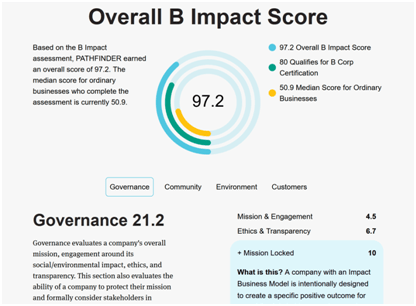
PATHFINDER is BCorp Recertified with a Global Leader Score!

We’re thrilled to announce that PATHFINDER was recently re-certified as a B Corporation. We first became a BCorp in August 2018, and have been proud members of the BCorp community ever since.

Certified B Corporations are leaders in the global movement for an inclusive, equitable, and regenerative economy. The certification is a designation that a business is meeting the highest standards of performance, accountability, and transparency in their operations and service delivery.

What’s very exciting about our re-certification is that we scored almost 10 points higher than we did when we first started out! And our Governance score is among the best in the world for a social enterprise of our size. We’ve worked hard to get to this point and we aim to continue to improve every year! Go us!

Read more on PATHFINDER’s BCorp status and more about the BCorp movement.

Building a Green Business from the Bottom Up   

Image via Pexels

This article is written and contributed by a guest author, Tina Martin of Ideaspired.com.

If you’re reading this article, chances are you’ve heard about the green movement that has been growing in homes and businesses around the world. More people are becoming cognizant of adopting a sustainable lifestyle and making changes to foster the environment.

Entrepreneurs and corporations alike are now taking the environment more seriously, and more consumers are looking to give their business to green companies. If you’re an entrepreneur, now might be the time to go green!

Not really sure how to kickstart your career as an ecopreneur? These tips and resources will help!

Learn What Makes a Business Green

First of all, let’s touch on the primary qualities of a green business:

  • Sustainability must be a priority in all of your business decisions.
  • Your service or products must be environmentally friendly.
  • No matter the operation, you must implement eco-conscious principles.
  • And you should never settle; always seek to improve your business so that it’s greener!
  • Finally, before you take things any further, be sure to establish your business with the state. Many new entrepreneurs choose an LLC thanks to the accompanying tax perks and asset protection.

Research Green Business Options

Green businesses are becoming more commonplace, and there’s really no shortage of eco-conscious career paths you can take:

  • Start a housecleaning business where you use only green cleaning products and techniques.
  • Open an energy consulting firm that conducts energy audits or advises other companies on how they can make their operations more sustainable.
  • Start a greenhouse business that sells plants, flowers, vegetables, and other natural products.
  • Sell eco-friendly products through an online store.

Think Sustainability at Every Turn

Finally, sustainability should be considered in every detail of your organization.

  • Recycle all of your paper materials in the workplace, and partner with a licensed recycler to dispose of e-waste.
  • For the times when you’re doing business away from your computer, keep a sustainable charger at the ready to power your smartphone or other device, and don’t forget to unplug the charger when not in use, as it consumes power even when not in use.
  • Use post-consumer waste (PCW) paper as much as possible.
  • If you’ll be building a structure for your business, whether now or down the road, work with a green construction company.

If you want to make a difference in your community and the world as a whole, consider becoming an ecopreneur. There are more green business options to choose from than ever before. Just keep researching and choose a career path that you can thrive in!

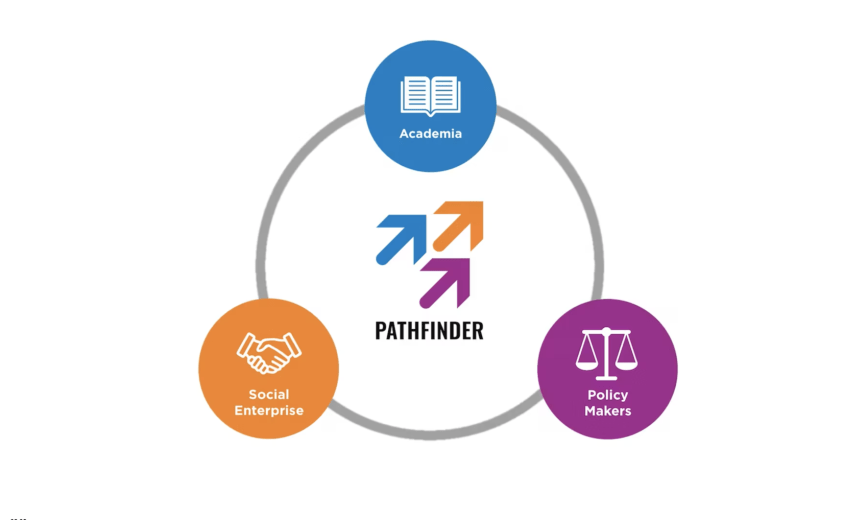
This article is brought to you by PATHFINDER, which strategically collaborates with partners to deliver on the Sustainable Development Goals. Partners may be academic institutions, social entrepreneurs and multinational organizations, policymakers, and other experts in global development. These partnerships have contributed to the global narrative of social entrepreneurship for the common good, through the work and the development of policy papers. For more information, contact us today!

Innovation and Social Design for a Global Impact

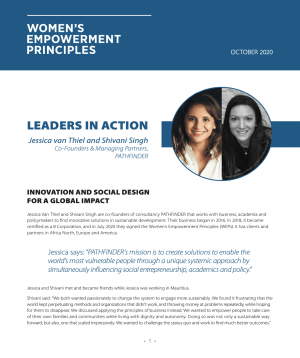
On this International Women’s Day we are excited to share our Leaders in Action piece published by The Women’s Empowerment Principles (WEPs), established by UN Global Compact and UN Women.

The article follows our journey as co-founders of PATHFINDER. It explores our different backgrounds, skills, and strength as a team working together across continents.

The WEPs are a set of Principles offering guidance to business on how to promote gender equality and women’s empowerment in the workplace.

The WEPs are informed by international labour and human rights standards and grounded in the recognition that businesses have a stake in, and a responsibility for, gender equality and women’s empowerment. A set of standards we not only support; we advocate through our social enterprise.

PATHFINDER became signatories of the WEPs in 2020.

How to adapt to uncertainty: an interview with the University of Sussex

PATHFINDER’s Jess was interviewed by the University of Sussex Careers & Employability Centre about her PhD research, how PATHFINDER started out, and how to adapt to changing contexts and challenges. Read on here. Go Jess!

Unlocking the potential of social entrepreneurs

As members of Catalyst 2030, we had the opportunity, along with other social impact stakeholders, to contribute to the report “New Allies: How governments can unlock the potential of social entrepreneurs for the common good” led by industry leaders McKinsey, Catalyst 2030, Skoll Foundation, Ashoka, Schwab Foundation, and others.

The report, published in January 2021, has made good headway since it was presented at last year’s World Economic Forum. It highlights how governments can act in five areas to create supportive ecosystems that unlock the potential of systems social entrepreneurs. Read on here

New Allies report cover