
What the Mighty United Nations can Learn from Local Social Entrepreneurs

The systems we have in place for international development are no longer working as they should. The most powerful institutions are also the most inefficient, accounting for much misuse and waste of resources. The United Nations – arguably the most important development institution in the world – has established an unparalleled reach, but it has also created an unprecedented bureaucracy that contains a shocking amount of inefficiency, misconduct, and even abuse. It’s time for new, more competent practices to replace global systems that were put into place decades ago, and social entrepreneurs are emerging from the fringes with compelling ideas that might counter – and perhaps even improve – these flawed systems.
While the UN’s operational deterioration seems most disheartening, social entrepreneurship has become something of a movement that holds great promise, attracting the attention of various experts and development workers from around the world. But who are these social entrepreneurs, exactly? While people are familiar with older, nonprofit, socially-driven enterprises (such as MSF/Doctors Without Borders and Save the Children, for instance), a lesser known set of entrepreneurships have stepped up for the dual purposes of doing good as well as generating profit.
These entrepreneurs have made it their mission to find and deploy optimal models of engagement, models that are financially sound, deliver discernible social impact, and create a cycle of sustainability. Social enterprises are designed to run like regular businesses, except their bottom lines include social impact, which they are measured for. Like other businesses, social enterprises are required to be efficient, scalable, and profitable in order to survive and indeed, thrive. They don’t rely on charity for funds, earning it by selling products and services instead – except these products and services are created to generate a positive impact in communities and beyond. These organizations certainly wouldn’t survive were they to adopt bureaucratic, inefficient, and questionable behaviors like the ones found in the largest NGOs around the world, beginning, of course, with the UN.
Another key aspect of leading social enterprises is that they work to include others in their journey. They educate as they create. They understand that, to be truly effective, they must inspire and engage others to join them. According to Harvard Business Review, social entrepreneurship “has emerged over the past several decades as a way to identify and bring about potentially transformative and societal change.” Social entrepreneurs are a special kind of tough – and that, evidently, is what the landscape currently needs. Not only do they take on the challenges of entrepreneurship, but they also sell innovative, experimental models of engagement to risk-averse financiers and wary publics around the world. According to Solène Pignet, the founder of Creators for Good, a consultancy service for social entrepreneurs established in 2014, 80% of social enterprise projects fail in the first few years. So, why would anyone take on such intimidating odds? They all share a reason: They are committed to changing the world and will not accept the failures of the status quo in order to do so. Social entrepreneurs believe that their commitment doesn’t require that they themselves live in poverty either. Countless nonprofits have shown that the world’s most educated, talented, and committed people cannot be retained for free and exploited; after all, everyone has bills to pay and families to raise. For the sake of their work, social entrepreneurs labor to pioneer ways of creating sustainable, impactful change – profitably.
Some of the world’s most successful social enterprises include the Nobel Peace Prize winning Grameen Bank, and the incredibly popular TOMS. Grameen Bank is based on Muhammad Yunus’ original microfinance model, and is responsible for deploying billions of dollars that have enabled some of the poorest people, women even, to lift themselves out of abject poverty. Without Grameen Bank, these most destitute individuals would have continued to rely on predatory lenders and would have, most likely, remained in an inescapable cycle of deprivation. Now they are able to earn incomes for themselves and their families, and educate their children, who will have a better chance at prosperity.
Jessica Jackley and Matt Flannery’s Kiva is another victorious implementation of the microfinance model, among others, while Blake Mycoskie’s TOMS has provided over 50 millions pairs of shoes to children who didn’t have any. The success of his company has allowed TOMS to follow up with more services for the poor, including clean water, eye care, and safer births. The more TOMS grows, the more of an impact it has in the lives of those who lack the very basics that most of us take for granted.
By contrast, consider the most publicized recent investigations of the UN, the single largest organization based on protecting and promoting the global fundamentals of humanity. Starting at the top, it’s no secret that the Security Council’s five permanent members include two (with crucial veto powers) who have openly disregarded the concepts of human rights and sovereignty, the very ideals they are meant to defend. As a result, we have a governing body that is unable to take action on conflicts and humanitarian crises of the worst kinds. Several of the UN’s Peacekeeping forces have been known to abuse the most vulnerable of the people they are meant to protect. In a recent New York Times article, Anthony Banbury, a former United Nations Assistant Secretary General for Field Support, recalls how on his first assignment as a human rights officer in 1998, he investigated rapes and murders of the poor and helpless in Cambodian refugee camps along the Thai-Cambodian border. “Never could I have imagined that I would one day have to deal with members of my own organization committing the same crimes or, worse, senior officials tolerating them for reasons of cynical expediency.”
Many diplomats and their families have operated with impunity and repeatedly broken the rules of law without consequence. Interns are consistently exploited and expected to work without compensation. People with similar skills and jobs are paid distinctly different amounts based on their passports. Many of those who work in or with various local offices are inept and limited in their skills and performances, yet they remain indefinitely because they are protected by the organization.
Were they in privately or publicly run businesses, none of these policies and occurrences would survive multiple conclusive investigations for as long as they have. But they are rampant in the UN – the prevailing bastion of humanity – and the world continues to pour resources into the UN’s many agencies. And while certainly some employees perform better than their colleagues, and some offices are more effective while others are barely operational, the problems go so deep that only a significant systemic and operational overhaul can save the organization. Banbury affirms the need for reform: “The bureaucracy needs to work for the missions; not the other way around. The starting point should be the overhaul of [our] personnel system. We need an outside panel to examine the system and recommend changes.” Indeed, significant change must be demanded of an organization that is meant to work for the benefit of people everywhere – but consistently fails to do so.
The question remains: How can we affect change in such a large-scale operation? What strategy can successfully demand transformation within a large and complex structure like the United Nations? The answer may be as simple as intelligently redirecting resources to social enterprises that prove to be effective alternatives. These are innovative, committed, and efficient teams that employ brilliant policies and people from around the world. They hold modern ideas and practices that could change the way we care for each other, and for our planet. Social entrepreneurs develop and deploy proven economic and scientific principles. These are the very organizations the world should be promoting. Doing so not only enables these little powerhouses of potential, but it also compels global bodies to evolve in meeting the changing needs of the world – or else face becoming obsolete.
Social entrepreneurship is becoming a movement in its own right. Current major global players that are in place to ensure the security and human rights of citizens are failing us, leaving a gap in the industry – and an opportunity for emerging innovations and players. People are recognizing the value in doing good while doing well. Most importantly, it’s a chance for social entrepreneurs to right the wrongs and propose innovative and effective solutions for helping people. Social entrepreneurs are not simply trying to affect change; they are the change.
The original article was published in MISC Magazine’s “Women: Shattering Expectations“ issue and can be found here: What the Mighty United Nations can Learn from Local Social Entrepreneur
Women are unstoppable!
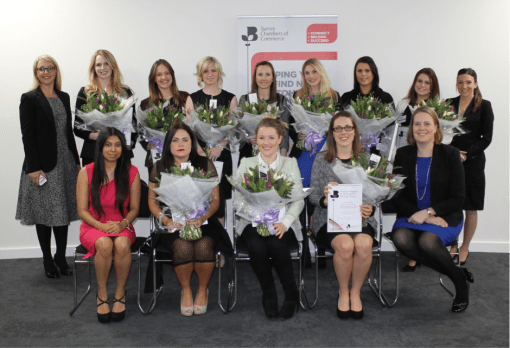
Women are unstoppable!
They have an incredible ability to take on several roles at once; entrepreneur, student, friend, mother, daughter…
I’ve always been in awe of the capacity women have to bring about impactful change in a big way, that’s why I’ve focused my career on the advancement of women’s rights and gender equality. So, when I was invited to speak at the BWiS International Women’s Day Rising Stars event I was thrilled and humbled. Here’s some of what I shared that evening.
Social Enterprise
In 2015, I co-founded PATHFINDER, a Canadian social enterprise focusing on sustainable development solutions. We provide creative solutions to enable the world’s most vulnerable through a three-pronged approach: by simultaneously influencing academics, policy, and social entrepreneurship. Our vision is to enable local social entrepreneurs so that they may provide for themselves, their families and their communities. Our partner projects are based in India, Nepal and Namibia. They focus on important causes with women’s rights as one of the priority issues.
I’m proud to say that in one short year, we’re ahead of where we aimed to be. That’s not to say that there haven’t been major challenges and hurdles along the way. Since we started the social enterprise, it has been an incredible learning experience, beyond expectations, both professionally and personally.
Growing up in Canada, I had a strong sense of needing to give back to the less fortunate in some way. I realised how lucky I was because it seemed like every opportunity in the world was available to me. I wondered how I could help right the great wrongs of the world, or at the very least, help better the lives of a few people. That’s what led me to work in the development sector which has allowed me to live in some incredible places around the world. My work reminds me every day that I can make a change, that I should make a change.
Melinda Gates of the Melinda Gates Foundation sums up my sentiment: “If you are successful, it is because somewhere, sometime, someone gave you a life or an idea that started you in the right direction. Remember also that you are indebted to life until you help some less fortunate person, just as you were helped.”
Hard Graft
Since the beginning, my (invaluable) partner Shivani and I have worked tirelessly. We were determined to fill well-known industry gaps in the international development sector because we recognised that the same mistakes were made over and over and the status quo was failing far too many. We worked nights and weekends, we researched constantly, we studied, we learned, we wrote, we consulted; we fully committed ourselves to doing whatever it takes to run a successful new business. It was, and remains tough work.
So why put myself through the uncertainty of starting a new business when I was 8 and a half months pregnant?! The answer is because I felt I absolutely should. And because it was something I had always wanted to do, a lifelong dream, so what better time than the present? There will always be a million reasons why not to do something. The trick is to say yes, even when it’s scary and uncertain because there will never, ever be a perfect time.
Lessons Learned
The key lessons I’ve learned along the way are:
1) You have a story to tell. Everyone has a story; everyone has something that motivates them. Your story is no less important than anyone else’s. Stop comparing yourself to others and know your self-worth.
2) Stop making excuses. It’s never too late. The timing will never be perfect. Push yourself beyond your comfort zone, and if you really want something, go for it. It’s not coming to you. You need to go out and get it, yourself.
3) It’s OK to ‘multi-task’ your life. Yes, it’s essential to focus and be present when doing something, but in life you can take on many roles at once. It’s OK to be an entrepreneur, a student, mother, wife and friend. You can do it. But when you’re doing it, be present. Be organised, prioritise, and be in the moment.
4) Use your strengths and delegate the rest. If you’re good at something, let it shine! Use it as a tool. If you’re a good communicator, focus on that. If you’re better at research, do that. Do what you like and do what you’re good at. And if you can, delegate the rest.
5) Surround yourself with positive people. This is likely the most important lesson I’ve learned along the way. Positive, glass-half-full people will always win. They’ll make you better. Besides, there’s no time for negativity; yes, it’s inevitable, it will happen. But if negativity is a constant presence in your life it will eventually weigh on you. Don’t listen to the nay-sayers. Keep positive. Often, if you break anything down, it is achievable.
-Jess
For International women’s day I had the honor of being a guest speaker at the 2016 Business Women in Surrey (BWiS) annual flagship event. Above is some of what I shared with the guests that evening.
For the full article and other links to the event and BWiS initiatives see here:
It’s getting busy at PATHFINDER!
From radio interviews to magazine articles, new partnerships and big moves, we’ve been busy!
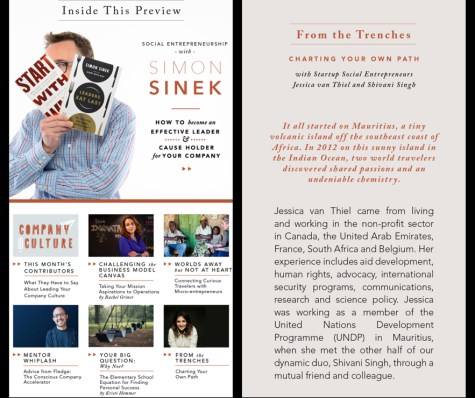
One of the many exciting examples is our article in Rank & File magazine’s launch issue! You can read the full article here and download the app.
Also, stay tuned for our article in MISC magazine as part of their “Women: Shattering Expectations” edition. We can’t wait to share it with you soon!
For more on what we’ve been up to, our latest newsletter has all the details here!
The Importance of Supporting Children’s Education in Nepal

Our Partners World Pathfinder Children’s Fund had an incredible interview with Frankie Picasso on her Mission Unstoppable radio show!
Her shows are always a blast and this one was no exception. Jeff Overall, Founder of World Pathfinder Children’s Fund, spoke about the amazing work they’re doing to support children’s education in Nepal. Check out what he had to say here!
Our Partners Talk Soap and Their Plans of Expanding to India
 Soaps of HOPE- The Drunken Chemist Goes to India
Our brilliant partners The Drunken Chemist spoke with Coach Frankie Picasso of The Good Radio Network in an incredible, uplifting and fun interview!
#SocEnt are far more accessible and popular than most people realize. You’ve got to hear this!
For more awesome interviews with Frankie Picasso click here.
Our Partners Are Unstoppable!
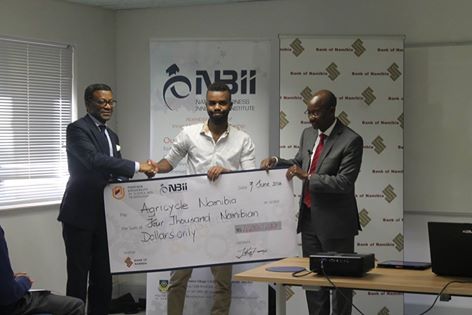
Our partners Agri-Cycle Namibia just won another award! Hosted by the Namibian University of Science and Technology and The Bank of Namibia, The Business Idea Competition honored some of Namibia’s brightest and most innovative startups. We’re proud to announce that Agri-Cycle were among the winners.
These guys have no lack of recognition and success. All they need now is seed capital, so we can deploy this incredible project!
Here’s more information about the award and on how you can get involved!
PATHFINDER is engaging high calibre students to help create impactful change!
We are proud to announce that we have selected a candidate from the University of Surrey’s renowned Professional Training placement programme to join our team this autumn. We are excited to train and work with an invested student who is passionate about sustainable development, the humanitarian sector, and most importantly, creating impactful change!
To read more about this exciting venture, see the full post on the Surrey Business School blog here!
Fellow Changemaker interviews PATHFINDER on media success!
The original article can be found on the Creators for Good blog page here.
PATHFINDER is taking on students!
We are proud to announce that we are now a partner organization of Surrey University’s prestigious Professional Training placement programme.
Surrey Business School gives students the opportunity to work with national and international businesses of all sizes and across all sectors, and we are now a part of this renowned initiative!
Over the past five years, more than 2,300 partner organizations have worked with the University to give students valuable work placements in the UK and abroad.
We are excited to be among these organizations and look forward to receiving our first student(s) this year!
 PATHFINDER